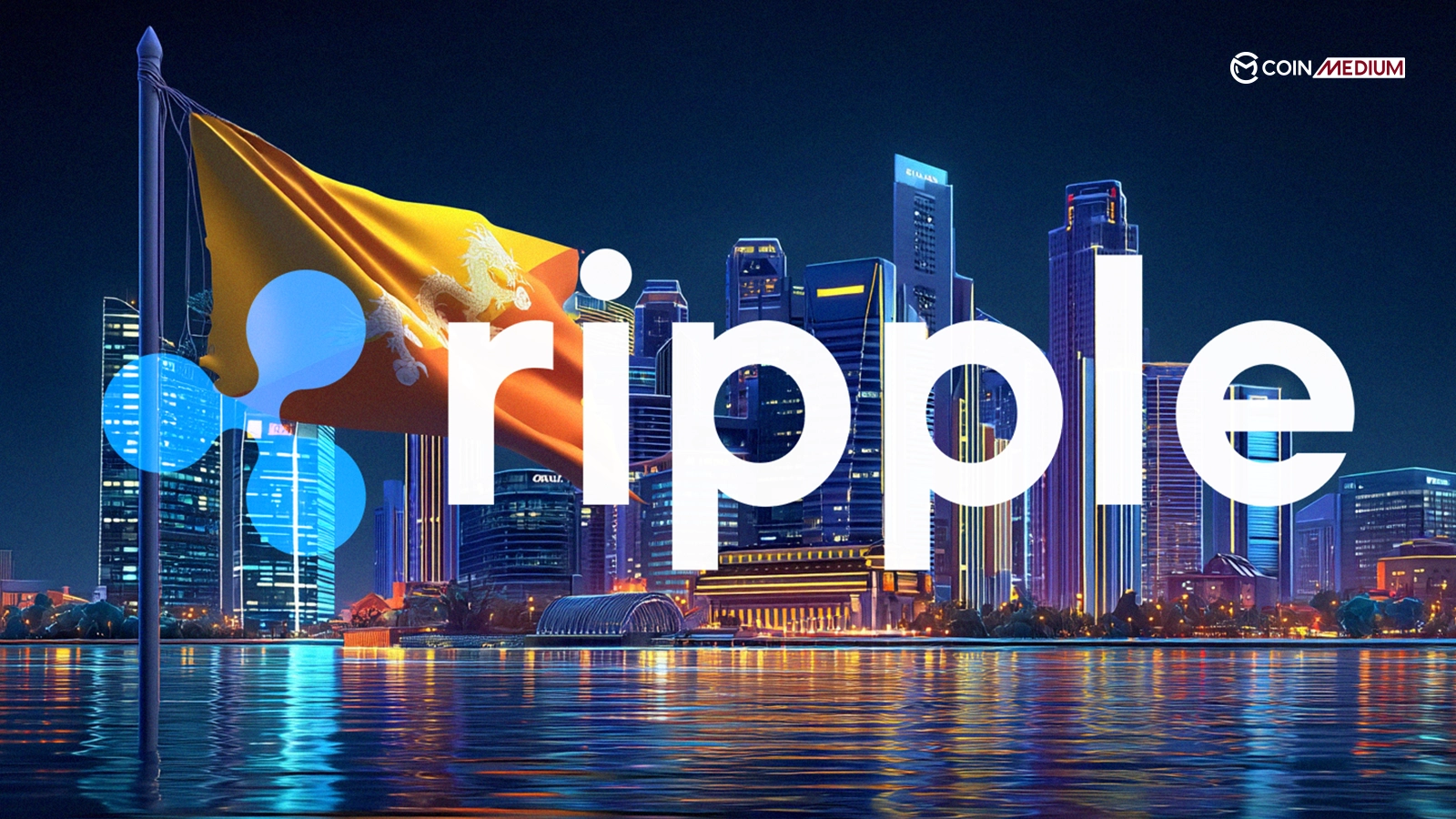


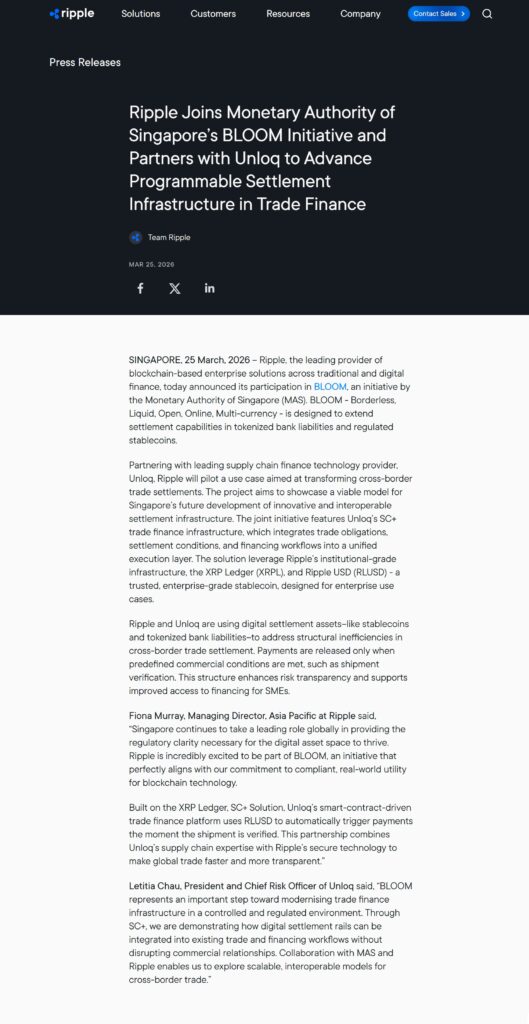
In a notable step for digital asset adoption in Asia, Ripple has entered Singapore’s sandbox through the Monetary Authority of Singapore’s (MAS) BLOOM initiative.
Working with Unloq, a local supply chain fintech, the project is trialing automated cross-border trade finance on the XRP Ledger.
They’re using Ripple’s RLUSD stablecoin for this. It’s a clear signal of Singapore’s continued efforts to integrate traditional finance with blockchain technology, all within a carefully managed setting.
Singapore’s sandbox, known as BLOOM (Borderless, Liquid, Open, Online, and Multi-currency), operates as a controlled testing ground. Here, financial institutions are free to pilot tokenized bank liabilities and regulated stablecoins, all in the name of achieving quicker and more streamlined settlements.
How will Singapore’s sandbox work?
Launched to extend how banks and firms handle transactions across borders, it addresses long-standing pain points like delays and opacity in trade finance. Ripple’s participation in the Singapore sandbox is about real-world cases.
This pilot leverages a sophisticated system, the SC+ platform from Unloq. It integrates trade contracts, settlement parameters, and financing into a unified, efficient workflow that operates on the XRP Ledger.
Payments will be triggered automatically in RLUSD. This condition-based mechanism eliminates the cumbersome manual processes and middlemen that often bog down transactions. The system will also use tokenized bank liabilities, which improves transparency about settlement risks while still following current regulations.
There’s a palpable sense of hope among those involved. For far too long, international trade has been hamstrung by letters of credit and a convoluted web of processes, tying up capital and creating an environment of uncertainty.
Ripple and Unloq are currently exploring how programmable stablecoins, like RLUSD, could potentially transform the financial landscape, specifically within Singapore’s regulatory sandbox.
The pilot program seeks to simplify processes, speed up capital flow, and reduce the risk of conflicts through direct links to actual events.
The BLOOM sandbox is an extension of the work done in the project Orchid, which involves both new and old players.
This project encourages collaboration in a safe and controlled environment because of the presence of big banks and stable coin issuers. Ripple is included in this project, which is a big plus for the evolution of the original blockchain technology.
Bhutan selling off its cryptocurrency holdings quietly
In the latest move, the Himalayan kingdom transferred another 519 Bitcoin, valued at roughly $37 million from a state-linked wallet.
Blockchain analysts tracking the flows noted splits to two destinations, one connected to Singapore-based trading firm QCP Capital. This trend of outflows has picked up steam lately, especially during March.
Data gleaned from on-chain intelligence platforms, such as Arkham, paints a picture of a consistent decline. Bhutan’s reserves have seen a substantial decrease, falling from a high exceeding 13,000 BTC towards the end of 2024.
By early October of the following year, holdings had already fallen to around 6,400 BTC.
The most recent activity leaves the country’s primary wallet with approximately 4,453 BTC. Earlier transfers this year included batches routed toward exchanges and OTC desks, suggesting structured liquidity management rather than rushed sales.
Observers point to possible links with national projects, including ambitions around the Gelephu Mindfulness City. Regardless of the broader strategy at play, the steady sales are a clear indication of Druk Holding and Investments’ active management. This is Bhutan’s sovereign investment entity.
Bhutan first built its Bitcoin reserves through mining, capitalizing on its abundant hydropower resources. Now, the conversion of a portion of this digital asset into conventional currency appears to be aimed at funding infrastructure projects or other economic activities.
The stories of Singapore’s regulatory sandbox and strategic asset management offer a glimpse into the evolving world of crypto in Asia.
Ripple’s entry into programmable finance, enabled by a favorable regulatory environment, offers a stark contrast to Bhutan’s approach. The story of Bhutan and Bitcoin offers an example of even smaller countries embracing the cryptocurrency as a viable sovereign asset.
Additionally, Singapore’s sandbox project could be the catalyst for the use of trade tools that incorporate stablecoins. The implications of this could have far-reaching effects, extending well beyond the boundaries of the city-state.
On the other hand, Bhutan’s sales offer another aspect to the ongoing debate about the complexities of holding and utilizing these assets in the midst of market volatility.
These developments in Asia show the region’s dual role as innovator and participant in the crypto space. Singapore’s sandbox offers a blueprint for testing ideas with real stakes, while Bhutan’s actions show pragmatic approaches to treasury diversification.