

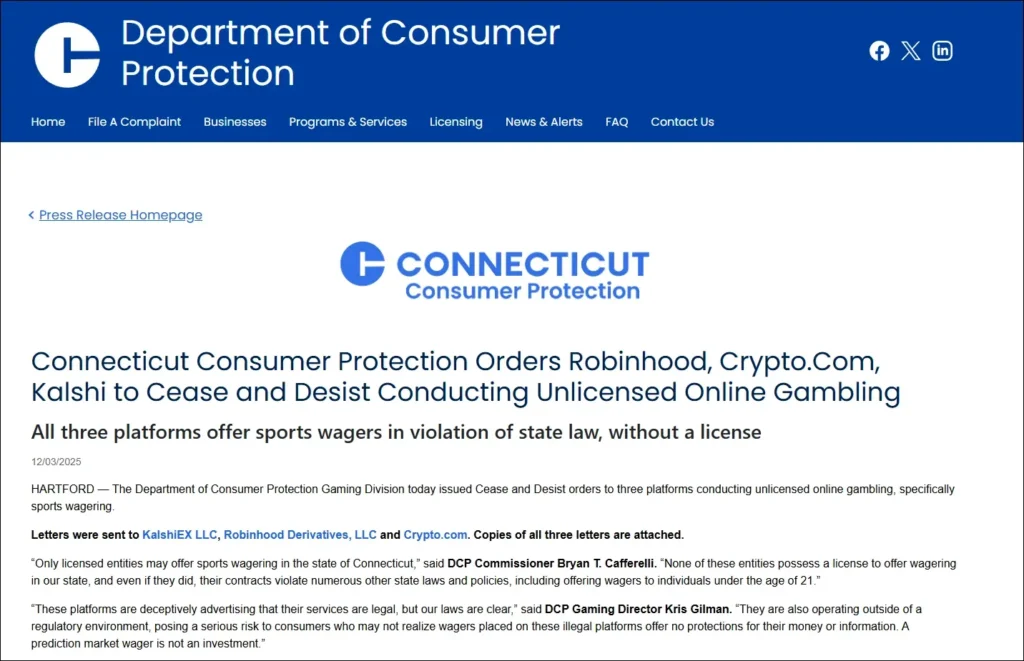
The digital betting landscape trembled once again in America, with Connecticut becoming the latest battleground in a nationwide crackdown. Three major platforms. Robinhood, Kalshi, and Crypto.com, now face cease and desist orders for allegedly operating unlicensed sports betting in the state.
The Connecticut Department of Consumer Protection issued letters on Wednesday, accusing the platforms of conducting illegal online sports wagering through event contracts. This is a way to allow users to bet on real-world outcomes like elections, sports results, and other events online or digitally. Bryan Cafferelli, commissioner of the Connecticut Department of Consumer Protection (DCP), said that these companies run online betting services without state licenses and that their contracts break several laws, including letting people under 21 use them. Kris Gilman, the DCP’s Director of the Gaming Division, criticised the platforms for misleading advertising and warned that people who use these unregulated services aren’t safe with their money and personal information.
The platforms fight back
Kalshi immediately countered by filing a federal lawsuit, arguing it operates under exclusive federal jurisdiction through the U.S. Commodity Futures Trading Commission (CFTC). The company maintains that its contracts are not traditional sports betting and therefore fall outside Connecticut’s state gambling authority. Robinhood issued a similar defense, stressing that its derivatives platform is federally registered with and overseen by the CFTC and is not subject to state-level sports-betting regulation. Crypto.com has not yet publicly responded to Connecticut’s letter, but industry observers expect it will align with Kalshi and Robinhood.
Connecticut joins 10 states challenging Kalshi’s operations, including New York and Massachusetts. Despite regulatory battles, Kalshi recently secured $1 billion in funding at an $11 billion valuation following record November trading volumes. The outcome of the latest development could be important, as it may determine whether CFTC-regulated event contracts can continue operating in the U.S. or face bans in some states.