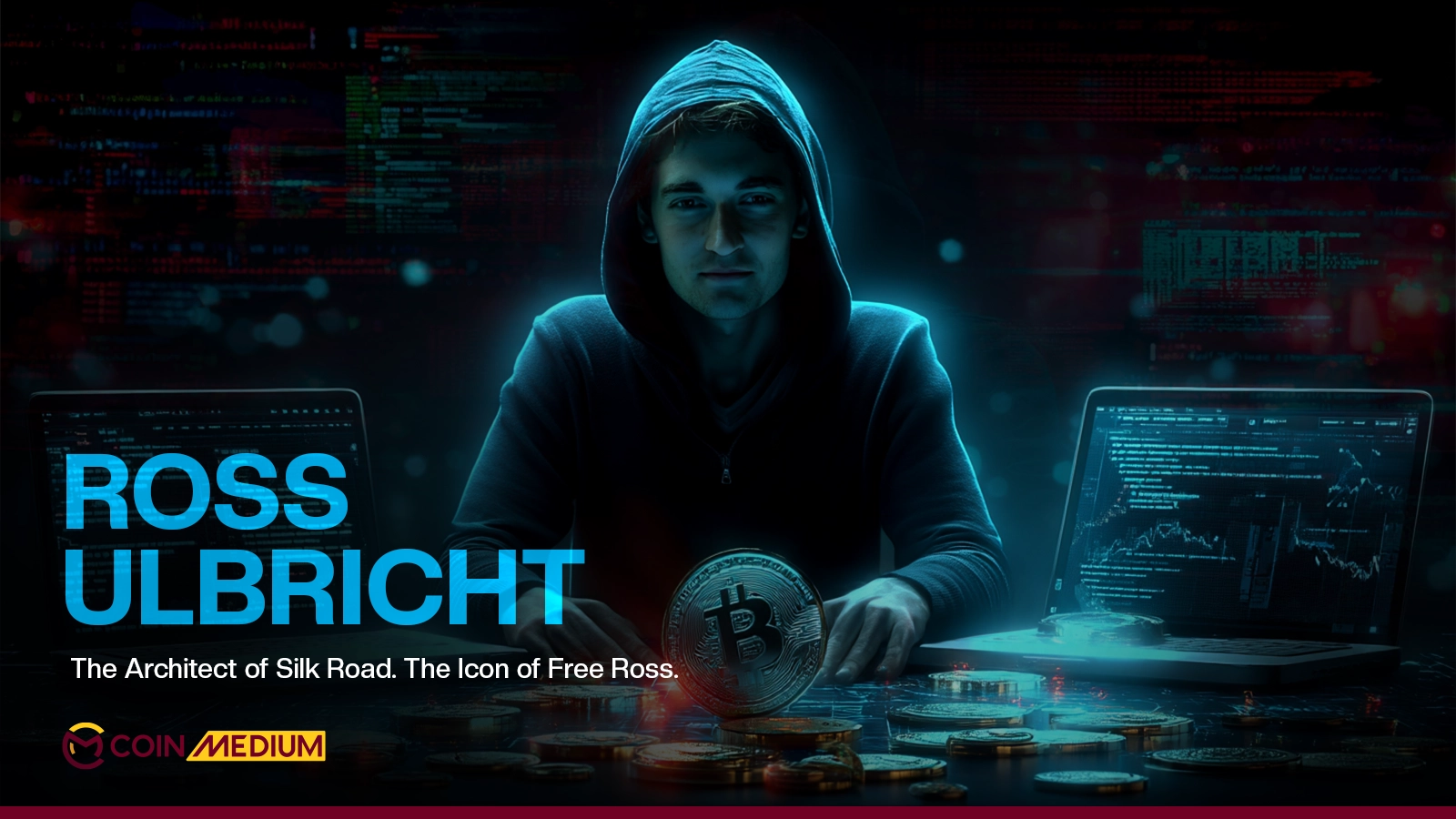


He was a young idealist with a physics degree, a libertarian soul, and ideas that the internet could set people free. What he built instead became the most controversial corner of the digital world and, unexpectedly, one of the most important chapters in the history of cryptocurrency.
Ross William Ulbricht was born on March 27, 1984, in Austin, Texas. By all accounts, he was the kind of young man who read too much philosophy for his own good. After earning a degree in physics from the University of Texas at Dallas and later pursuing graduate studies in materials science at Penn State, Ulbricht grew restless. He wanted to do something that mattered. He envisioned a project that would empower individuals to make their own decisions and pursue their happiness. In 2010, he came up with an idea called Silk Road.
Building the Underground Amazon
The concept was simple—an anonymous online marketplace where buyers and sellers could transact without government interference. Ulbricht rented a cabin in the Texas hill country, reportedly to grow psychedelic mushrooms, but in reality, he began building the infrastructure for what would become the internet’s most famous black market.
Silk Road launched in February 2011, operating as a hidden service on the Tor network—a system that routes internet traffic through multiple encrypted layers to conceal the identity and location of its users. To complete the anonymity, Ulbricht made a choice that would tie his fate permanently to the history of digital currency: he built Silk Road around Bitcoin.
At the time, Bitcoin was barely two years old and largely unknown outside a small circle of tech and cryptography enthusiasts. Ulbricht understood its architecture better than most. Every Bitcoin transaction was recorded on a public blockchain, but wallets carried no names—just alphanumeric addresses. For a marketplace that needed to keep both buyers and sellers invisible, it was the closest thing to untraceable digital cash available at the time. In the beginning, Ulbricht operated simply as “Admin.” It wasn’t until 2012 that he adopted the moniker Dread Pirate Roberts—a name borrowed from the 1987 film The Princess Bride. His defense would later argue that he had created the site but handed it off to others, only to be drawn back shortly before his arrest. “Every single transaction that takes place outside the nexus of state control is a victory,” he wrote under that pseudonym.
The marketplace that emerged was, in a strange way, remarkably well-run. Silk Road used an automated escrow system to hold Bitcoin until orders were fulfilled, protecting buyers from fraud. It had a public review system. It even had a moral code—weapons, child exploitation materials, and contract killing were explicitly banned. What it did allow, abundantly and openly, was drugs: cocaine, heroin, LSD, MDMA, and dozens of other controlled substances, all available for delivery to a mailbox near you, paid for in Bitcoin.
Between its launch in early 2011 and its shutdown in October 2013, Silk Road facilitated roughly 1.2 million transactions, totaling approximately 9.5 million bitcoins. In commissions alone, Ulbricht earned more than $13 million worth of BTC. For a two-year-old experiment in peer-to-peer digital currency, it became good enough proof.
The Fall of Dread Pirate Roberts
The FBI had been watching the project closely. The trail began in early 2011 when a tax agent noticed a post about Silk Road on a public forum. The same anonymous username had, months earlier, posted a job listing—and that listing linked back to an email address registered to a real person. The name attached to it was Ross Ulbricht. But the personal email wasn’t the only crack in the armor. Investigators also discovered that the Silk Road server was leaking its real IP address through a configuration error on the login page—a flaw in the CAPTCHA system. That technical slip allowed them to physically locate the server in Iceland, clone it in secret, and obtain the site’s full administrative logs.
The investigation that followed cast a long shadow of its own. Two federal agents involved in the probe—Carl Force of the DEA and Shaun Bridges of the Secret Service—were later imprisoned for stealing Bitcoin and using pseudonyms to extort Ulbricht during the investigation. Though the corruption wasn’t enough to overturn his conviction, it became a cornerstone of his defense and a source of lasting controversy around the case.
On October 1, 2013, FBI agents located Ulbricht inside the Glen Park branch of the San Francisco Public Library. They staged a distraction and grabbed his open laptop before he could encrypt or wipe it, and this gave investigators access to his private keys, his communications, and essentially his entire operation.
The charges were sweeping: conspiracy to distribute narcotics, continuing criminal enterprise, computer hacking, money laundering, and trafficking in fraudulent identity documents. Prosecutors also alleged that Ulbricht paid $730,000 to arrange several murders, but none were carried out, and he was ultimately not prosecuted for them.
In February 2015, a Manhattan jury convicted him on all counts. Two months later, a federal judge sentenced him to two life terms in prison, plus 40 years, with no possibility of parole. He was just 31 years old. The sentence was widely criticized, even by those who had no sympathy for Silk Road, as it exceeded the punishment handed to most of the actual drug dealers who had used the platform. Every other defendant in the case, including the vendors who physically shipped the narcotics, received sentences ranging from eight months to ten years.
The Bitcoins that Ulbricht never got to spend became another strange story. When the FBI seized Silk Road’s servers, they also found Bitcoin wallets containing enormous sums. In 2020, law enforcement seized over $1 billion in digital currency connected to the case. A separate 50,676 Bitcoin—worth roughly $5.35 billion at 2025 prices—was recovered from a hacker who had stolen it from Silk Road back in 2013. Ulbricht eventually agreed to relinquish any claim to it.
A Pardon, a Return, and a Legacy That Refuses to Stay Quiet
From inside prison, Ulbricht became an icon for the crypto and libertarian communities. The “Free Ross” movement grew steadily louder over the years, finding particular resonance among Bitcoin advocates who viewed his sentence as not only disproportionate but politically motivated. He corresponded with supporters, released artwork, sold NFTs to fund his legal defence, and gave phone interviews from a maximum-security facility.
In May 2024, then-U.S. presidential candidate Donald Trump made a campaign promise at the Libertarian National Convention: if elected, he would reduce Ulbricht’s sentence. On January 21, 2025—his first full day in office—Trump went further and issued a full and unconditional pardon. Ulbricht walked out of prison after nearly eleven years.
The response from the crypto world was euphoric. In May 2025, he appeared on stage at the Bitcoin 2025 conference in Las Vegas—his first major public appearance since his release—visibly overwhelmed and moved. “Winning your freedom feels as amazing as losing it feels awful,” he told the crowd. He spoke of learning about DeFi, Web3, and AI all at once, likening himself to Rip Van Winkle waking after a decade of sleep. He urged the crypto community to stay unified and decentralized, warning that division was the greatest threat to the movement he had helped ignite.
Months later, in June 2025, a mystery donation of 300 Bitcoin—worth approximately $31.4 million at the time—arrived in a wallet linked to Ulbricht. Blockchain analysis firm Chainalysis traced it to someone likely connected to AlphaBay, Silk Road’s spiritual successor. Industry observers said this was how the dark web’s old money was finding its way back.
Ulbricht remains one of the most fascinating figures in the history of the internet. He was not a cartel boss or a violent criminal. He was just a programmer with a philosophy degree who believed technology could route around government control. What he built enabled real harm: drugs reached real people, and some did not survive them. But what he also built, almost accidentally, was the first large-scale demonstration that Bitcoin worked. He demonstrated that Bitcoin could power an economy and establish the legitimacy of digital money.
Ulbricht proved something that no white paper ever could. And, uncomfortable as it is, that is where the modern crypto world began.