A living genius who bridged the underground world of 1990s cypherpunks with the modern revolution of Bitcoin. A British computer scientist and cryptographer. He earned his reputation years before Bitcoin even existed, building powerful tools to safeguard online communication. Today, he is seen not just as a veteran innovator, but as a living link between the ideals of digital privacy pioneers and the rise of the world’s most famous cryptocurrency.
A glorious journey in cryptography that began with a deep interest in privacy and secure communication on the internet. In the 1990s, when email spam and surveillance were rising, he developed new ways to use mathematics and computer code to protect digital interactions. This work placed him in close contact with the cypherpunk community, a group of thinkers and programmers who believed that privacy was a basic right and that encryption could protect it.
When Bitcoin appeared in 2009, Back was already a known figure among cryptographers. His invention, called Hashcash, directly influenced Bitcoin’s design, and Satoshi Nakamoto, the mysterious creator of Bitcoin, even reached out to him in the early days. Since then, Adam Back has become a leading advocate for Bitcoin.
Wearing the Cypherpunk Spirit
Adam Back didn’t just write code, he lived the cypherpunk spirit. In the late 1990s, the U.S. government treated strong encryption as if it were a weapon, putting it in the same export category as tanks and missiles. To send encryption software overseas, you needed a special government license. Back found this restriction absurd. To make his point, he turned his protest into art and fashion.
He designed what became known as the “Munitions T-shirt.” Printed on the front was just three lines of Perl code, a tiny but functional version of the RSA encryption algorithm.
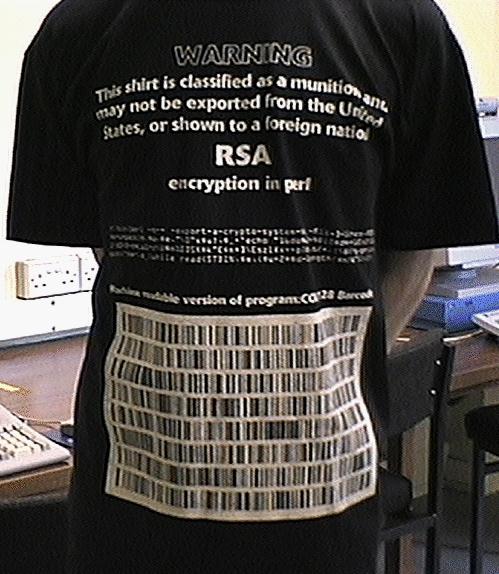
Technically, the code was powerful enough to encrypt and sign messages. That meant anyone wearing the shirt was, in theory, “exporting” munitions without a permit. It was a clever, cheeky jab at the government’s rules and a way to show how meaningless those restrictions had become in the digital age.
Back sold the shirts online and joked that it was the easiest way to “smuggle crypto” across borders. But beyond humor, his stunt carried a serious message, freedom of information and privacy shouldn’t be controlled by governments. His T-shirt protest became a small but symbolic victory in the broader push to loosen encryption export laws, which eventually changed by the year 2000. It perfectly captured what made Adam Back stand out: a mind that could turn technical genius into cultural rebellion.
Hashcash: The Invention That Paved the Way for Bitcoin
At just 22, while juggling his studies and late-night coding experiments, Adam Back stumbled upon an idea that would quietly change the internet. Frustrated by the flood of junk mail in his inbox, he began exploring ways to make spamming costly and inconvenient. That’s when he sketched out Hashcash, a proof-of-work system that required computers to solve a tiny puzzle before sending an email. It was a simple fix to an everyday problem, yet it would later become one of the most important building blocks of Bitcoin itself. His idea was simple but brilliant. Instead of blocking spam through filters alone, Hashcash made every email sender perform a small piece of computational work, a puzzle solved by a computer before the email could be sent.
For everyday users, this process was barely noticeable. But for spammers sending millions of emails, the required computing power quickly became a heavy barrier preventing their spam campaigns from taking off.
Hashcash wasn’t just about email. It introduced a concept called proof-of-work, where computers must prove they’ve done a certain amount of effort before gaining access or approval. This innovation later became crucial in the world of cryptocurrencies. It provided a way to secure decentralized networks, making it extremely difficult to cheat the system without investing enormous computing power.
More than a decade later, when Satoshi Nakamoto credited Hashcash as one of the key building blockBitcoin was launched in 2009, as of the cryptocurrency. By using proof-of-work, Bitcoin could run without a central authority, securing transactions and protecting the network from fraud or attack. Back’s Hashcash, once a tool against spam, became the foundation for Bitcoin’s success and one of the most important inventions in digital finance history.
Suspicious Ties to Satoshi Nakamoto
Back’s relationship with Satoshi Nakamoto has always been viewed with suspicion. The fact that Satoshi directly cited Back’s work on Hashcash in the 2008 Bitcoin white paper fueled those doubts, and it became even more intriguing when Satoshi personally reached out to him in the early days, asking for feedback and discussing how proof-of-work could power a decentralized currency.
Because of this, speculation has swirled for years that Adam Back might actually be the anonymous Satoshi Nakamoto himself. Some researchers have pointed to his deep cryptographic knowledge, his early connection with Satoshi, and his vision for digital privacy as reasons why he could fit the profile. The fact that Back was already working on proof-of-work years before Bitcoin only fueled the rumors, making him one of the top names in the ongoing hunt for Satoshi’s identity.
Back, however, has always firmly denied being Satoshi. He has repeatedly stressed that the creator’s anonymity is part of Bitcoin’s strength and legacy. In his view, the focus should remain on the technology and the community, not on the person or group who invented it. By distancing himself from the mystery, Back has reinforced a core cypherpunk principle: that ideas and code matter more than personalities.
Is Adam Back Satoshi Nakamoto?
The mystery of Bitcoin’s creator has always circled around Adam Back. While he denies being Satoshi Nakamoto, there are reasons some believe he fits the profile, and just as many reasons why he doesn’t.
Why Adam Back could be Satoshi:
- Early cryptography pioneer: He invented Hashcash in 1997, a direct predecessor of Bitcoin’s proof-of-work system.
- Direct contact with Satoshi: He was among the very few people Satoshi reached out to in Bitcoin’s early days.
- Philosophical alignment: His cypherpunk roots match Satoshi’s ideals of privacy, decentralization, and distrust of authority.
- Technical ability: Back had the skills to design Bitcoin’s code, unlike many other early adopters.
Why Adam Back is probably not Satoshi:
- Public denial: He has consistently denied the claim, even calling it a distraction from Bitcoin’s mission.
- Writing style mismatch: Linguistic analysis of Satoshi’s emails and white paper doesn’t align with Back’s known writing.
- Different timeline: While Back was in the cypherpunk community, he wasn’t actively pushing digital money systems when Bitcoin launched.
A Non-Stop Journey of Innovation
While most people know Bitcoin as “digital gold,” Adam Back has been working to expand what it can do. He recently introduced a new tool called Simplicity. It’s a programming language designed to bring smart contracts, small pieces of code that can run automatically onto Bitcoin. In plain words, it’s about making Bitcoin more useful than just sending or storing money.
This move is important because smart contracts are usually linked to other blockchains like Ethereum. By giving Bitcoin similar abilities, Back hopes to make it stronger, more flexible, and more appealing to developers and businesses.
The crypto-genius is looking far beyond everyday traders. He openly says the future of Bitcoin isn’t retail speculation, but rather corporate treasuries and even nation-states using it to secure their wealth. Today, Back remains one of Bitcoin’s most loyal believers. As the founder and CEO of Blockstream, he continues to build tools and technologies that strengthen the Bitcoin ecosystem from sidechains and security systems to advanced infrastructure that helps keep the network truly decentralized. For him, the real question is not just what Bitcoin is today, but where it is going, and his answer points toward a future where Bitcoin plays a central role in global finance.