Have you ever considered how the mankind exploited technology to safeguard personal privacy? Cypherpunks were the ones who were already engaged with that and they ciphers who thought everyone should have the right to secure their messages, data, and personal life. They employed encryption as a safeguard for information.
The Cypherpunks movement roots can be traced back to the late 1980s and early 1990s. A handful of geeks, computer whizzes, and hackers began to meet and discuss the topic of privacy. They were concerned about government and corporate surveillance over the public and information being controlled. The Cypherpunks intended to counteract this by developing means that would grant users a greater amount of power over their own data.
The ideas of the Cypherpunks are evident in the present-day technologies such as Bitcoin, encrypted chats, and secure emails. It is true that the majority of people are not aware of their name, but Cypherpunks did pave the way for the digital privacy tools which are already a part of daily lives for millions of people like Signal, Proton Mail, and Tor browser.
What was the Origin of the Cypherpunks Movement?
The Cypherpunks movement began with a group of individuals with a shared aspiration to create a safer and more private internet. Rather than merely talking about the issue, they opted for a proactive approach to address the situation. Their goal was to devise actual instruments, such as software and programs, that would enable the online privacy protection of individuals.
In the year 1992, the trio of men, Eric Hughes, Timothy May, and John Gilmore, initiated a unique email list which they called the Cypherpunks mailing list. This was an online platform where people from different parts of the globe could brainstorm methods of upholding privacy via encryption. They exchanged ideas about innovative ways to conceal communications so that no one could hear them.
The Cypherpunks firmly held the view that it was technology, not regulations, which could best safeguard the rights of individuals. They were of the opinion that if people were equipped with the right tools, they could
The Belief in Encryption
The Cypherpunks believed that privacy is a basic human right. They think people should be able to talk, share, and do business without anyone spying on them. They believe that if people don’t have privacy, they can’t really be free. Without privacy, governments or companies could easily control what people say or do.
To protect this privacy, Cypherpunks believe in the power of encryption. Encryption is a way to turn a message into a secret code so that only the right person can read it.
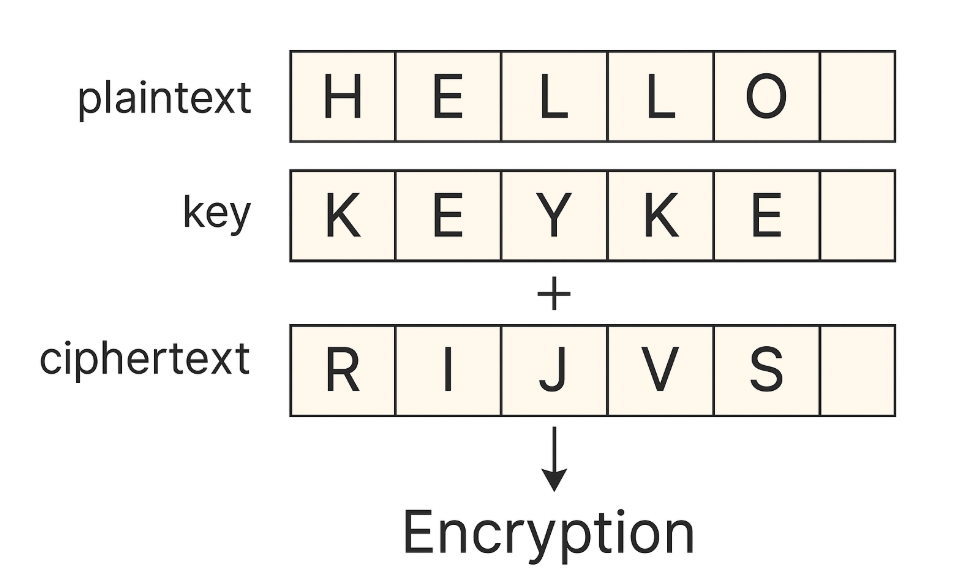
Cypherpunks say that strong encryption gives power back to the people. They think that no law or rule will stop spying, but good technology can. That’s why they work to create tools that help everyone keep their data safe.
Cypherpunks share their tools with the public, so anyone can use them. They have helped to create things like secure email, encrypted messaging apps, and cryptocurrencies like Bitcoin. Their goal is to build a world where people can trust the internet because they have the right tools to protect themselves. They believe that privacy should not depend on asking for permission, it should be something people can take for themselves by using technology.
Bitcoin, the Symbol of Independence
A lot of people attribute the existence of Bitcoin today to the Cypherpunks. Before the birth of Bitcoin, and corresponding to the Cypherpunks, there was a lengthy discussion about money that was strictly digital and mainly without the interference of banks or governments.
Some of them even went so far as to experiment with very rudimentary concepts like eCash, B-money, Bit Gold, and Hashcash. Even though these projects did not evolve into universal currencies, they were instrumental in laying down the ground for Bitcoin’s future.
They were looking for a method of transfer wherein money could be exchanged between parties with utmost privacy and security and with no reliance on a third party. This aspiration was one of the several motivations behind Bitcoin’s conception.
Satoshi Nakamoto, the anonymous creator of Bitcoin, made a reference to the Cypherpunk ideologies in 2008 when he released the Bitcoin whitepaper. Cryptography, digital signatures, and a public ledger (known as blockchain) are the means through which Bitcoin operates to allow safe money transfer and receipt. A good number of Cypherpunks welcomed Bitcoin because it was literally the embodiment of their thoughts; it was the tool that provided financial freedom and privacy to the masses.
Hal Finney and Adam Back, two prominent Cypherpunks, were the earliest adoptive and collaborative figures in relation to Bitcoin. The first-ever Bitcoin transaction was actually sent by Satoshi to Hal Finney. This relationship between Cypherpunks and Bitcoin is a close one since both are after empowering people to take control of their lives through technology.
Why Cypherpunks Matter Today and Who They Are
Cypherpunks have not lost their relevance even in the present day since their teachings were a significant factor in the development of the current internet. Their activities granted people access to privacy-protecting tools, such as encrypted messaging, secure emails, and currencies. In a digital world characterized by relentless data mining, the Cypherpunk slogan, “people should control their own information,” is becoming increasingly relevant.
The Cypherpunk pioneers, among them, Eric Hughes were the most significant contributors to the realization of these ideas. Hughes is the author of A Cypherpunk’s Manifesto in which he posits that privacy is an essential feature of a free society. May, who was another early intellectual leader, prophesized the empowering potential of technology for the state. Gilmor was the one who advocated for the universal adoption of encryption tools by the poor and the weak.
Hal Finney who was a Cypherpunk that was always very supportive of Bitcoin and with a strong background in cryptography, are two of the movements’ later significants. Adam Back, a Cypherpunk, developed a solution called Hashcash that became the backbone of Bitcoin mining. The legacy of these individuals continues to drive the development of privacy and freedom protecting technologies globally.
The Legacy of the Cypherpunks
Initially, the Cypherpunks consisted of a relatively small yet very powerful group whose main motto was that everyone should enjoy the right to privacy (real world or virtual). They made it evident the technology, rather than just laws, can protect and even promote freedom. Their concepts played a big part in the development of many of the tools we use daily, such as encrypted chats, digital wallets, and cryptocurrencies including Bitcoin. Even if people do not know the word “Cypherpunk”, most of them are still the indirect beneficiaries of this group’s contribution.
The world today is encountering fresh difficulties. More and more methods are being invented by governments, corporations, and even criminals to gather data and monitor people’s online activities. And thus, the ideals of the Cypherpunks get more recognition and acceptance than ever. Nowadays, privacy is not simply a matter of anonymity but also a matter of securing the right to free speech, protecting personal data, and leaving people alone who do not want to be under constant monitoring. The technology built by Cypherpunks supports these people and the future will demand more such tools.
The essence of Cypherpunks is still alive. All over the globe, new programmers, advocates, and intellectuals are contributing to this legacy. They are putting forth frameworks that empower the individuals to regain the power over their data, money, and digital existence. The Cypherpunks have proved that a small unit consisting of very firm believers and very smart individuals can actually flip the world upside down. And as long as privacy and freedom are at risk, the Cypherpunks’ cause will never be completely over.