

Blockchain infrastructure has been through several waves already. Early networks proved decentralization could work. Later platforms focused on smart contracts and composability. Now the pressure has shifted again. Users want applications that feel fast, predictable, and usable without understanding what is happening under the hood.
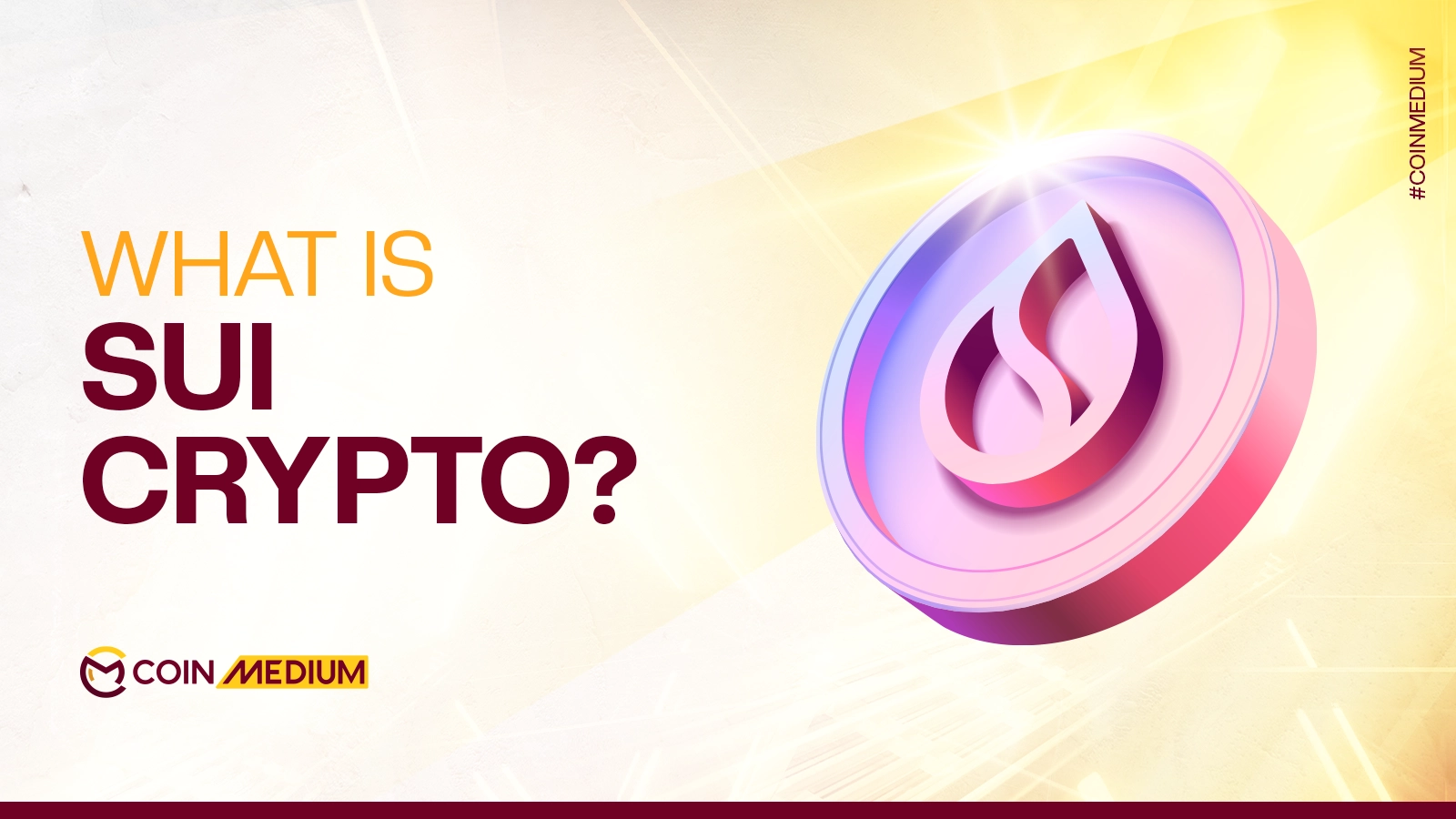
That change in expectations explains why newer Layer-1 networks like Sui are drawing attention.
Sui launched in 2023 with a fairly direct goal: to remove some of the practical friction that has followed blockchain systems for years. Instead of trying to squeeze more performance out of older designs, the network approaches transaction handling and asset management from a different angle. For developers, this means fewer workarounds. For users, it mostly means things happen quickly and consistently.
A Different Way of Thinking About Assets and Transactions
Most blockchains rely on a shared global state. Every transaction touches the same ledger, which forces the network to process activity in a strict order. That structure is simple, but it creates congestion as usage grows.
Sui avoids part of that problem by treating digital assets as independent objects. When two transactions do not interact with the same object, the network does not need to serialize them. They can be processed at the same time.
In practice, this sounds technical but feels simple. Transfers confirm quickly. Applications respond immediately. During busy periods, performance degrades far less than on networks that push everything through a single pipeline.
This object-based design is the foundation for Sui’s parallel execution model, and it is the reason the network can support high activity without relying on unpredictable fee spikes.
Consensus Without Excess Complexity
Sui runs on a Delegated Proof-of-Stake system. Validators maintain the network, while token holders can delegate stake and earn rewards for supporting security.
One design decision that matters more than it might seem is how Sui separates transaction ordering from data availability. These two steps are often tightly coupled on other networks, which means simple actions can get stuck behind complex ones. By decoupling them, Sui avoids that bottleneck.
The network originally used the Narwhal and Bullshark protocols. More recently, it introduced Mysticeti, which reduced confirmation times even further. The outcome is noticeable: many transactions finalize in under a second without sacrificing determinism or auditability.
Smart Contracts and Move
Sui applications are written in Move, a programming language that came out of Meta’s Diem project. Move was designed with asset safety in mind from the beginning.
Rather than handling tokens as simple numbers on a balance sheet, Move is built around the idea of ownership. Assets have clear rules about where they live and how they move, which makes it much harder for them to be copied or lost by mistake. A lot of common errors tend to show up early, before the code ever goes live.
Move is not as widespread as Solidity, which means the developer pool is smaller. At the same time, teams that do adopt it often find that it reduces entire classes of bugs that have caused serious issues on other chains.
How Sui Fits Among Other Layer-1 Networks
Sui is not trying to replace Bitcoin or compete directly with Ethereum’s early DeFi dominance. It sits closer to performance-oriented networks.
Ethereum does a lot of things well, but fees and congestion are still part of the experience. Solana is built for speed, although it has had its share of growing pains. Sui takes a more practical route, aiming for fast execution without the stop-start behavior that can frustrate users.
Since launch, the network has avoided major outages and maintained relatively stable transaction costs. That operational reliability has become one of its strongest selling points.
The Role of the SUI Token
SUI is the token that keeps the network running. It is what users spend when they make transactions, store data on-chain, or interact with applications. Validators stake SUI to help secure the network, while regular holders can also use the token to participate in governance.
The total supply is capped at 10 billion, but those tokens are released gradually rather than all at once, with distribution scheduled over multiple years. A large portion of the supply is reserved for ecosystem growth, including developer support and validator incentives, rather than being released into circulation upfront. The idea is to keep the network functional and growing over time, rather than optimizing purely for short-term market activity.
Top dApps From the Sui Ecosystem
Several projects highlight how Sui’s design is being used in practice.
Cetus Protocol is one of the more active decentralized exchanges on the network. Its concentrated liquidity approach allows capital to be deployed where it is actually used, which generally results in better execution for traders.
Walrus focuses on decentralized storage and data availability. By relying on erasure coding instead of full replication, it reduces storage costs while maintaining reliability, especially for large files.
Sweat Economy gives a glimpse of how the network behaves outside of trading and finance. The app rewards users for verified physical activity, which means lots of small interactions happening regularly. That kind of usage is a good test for whether a network can stay responsive without users noticing the underlying mechanics.
BlueMove focuses on NFTs and has become a common entry point for creators on Sui. Minting and trading are relatively inexpensive, and confirmations happen quickly enough that the process feels smooth rather than technical. For many users, it is their first hands-on experience with the network.
Getting Started on Sui
Using Sui does not require much preparation, but there are a few basics to take care of before interacting with applications.
Set up a wallet
The first step is installing a wallet that supports Sui. After creating an account, make sure the recovery phrase is stored safely.
Get SUI tokens
To do anything on the network, you will need SUI. Most people purchase it on centralized exchanges and then transfer it to their own wallet.
If you are experimenting, there is also a testnet option. The Sui faucet provides small amounts of test tokens so developers can try things out without using real funds.
Use applications
With funds in your wallet, you can start using Sui dApps. Open a Sui-based dApp and connect your wallet.
From there, what you do depends on the app itself. Some focus on trading, others on NFTs or staking, and some are built around consumer use cases. Once connected, the experience is generally straightforward.
Strengths and Trade-Offs
Sui’s strengths are straightforward. Transactions settle quickly. Fees are predictable. The network remains responsive even under load.
The trade-offs are also real. Move is less familiar than older smart contract languages, and token unlock schedules are something long-term participants watch closely. Like any newer Layer-1, Sui’s future depends more on sustained adoption than early excitement.
Final Thoughts
Sui fits into a wider pattern that is starting to show up across blockchain infrastructure. Less attention is being paid to theoretical limits, and more to how systems behave when people actually use them. Speed matters, but so does consistency. So does the ability to build applications without being worried that something might happen to the network.
In the long run, Sui’s relevance in Web3 will depend on how its developer ecosystem grows and whether applications on the network see long term real-world use. What can already be said is that the network prioritizes practical design. As blockchain tools move out of niche environments and into everyday products, that focus may prove more important than just raw technical ambition.