

Blockchain infrastructure has changed significantly over the past decade. Platforms like Ethereum introduced smart contracts and composability. Today, the pressure has shifted again. Users no longer care only about decentralization. They want applications that feel fast, predictable, and usable without needing to understand gas mechanics or wallet complexity.
That change in user expectations is part of the reason networks like NEAR Protocol have adjusted their focus over time.
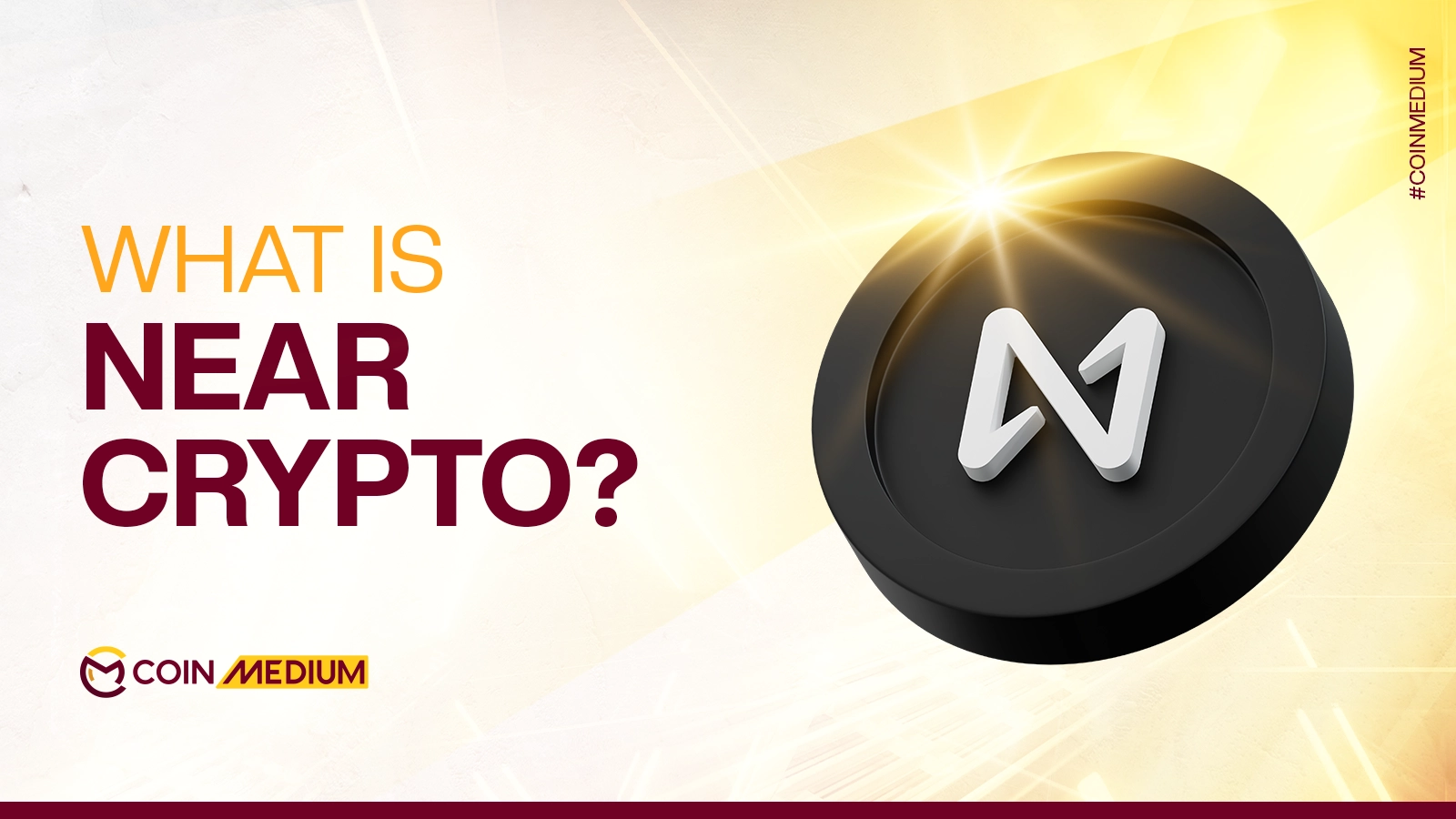
NEAR is no longer marketed simply as a sharded blockchain. In 2026, its identity centers on user-owned AI, chain abstraction, and seamless cross-chain interaction.
A Different Approach to Identity and Cross-Chain Access
Many blockchains still operate as isolated ecosystems. If you want to use multiple chains, you manage multiple wallets, interfaces, and bridges. That fragmentation creates friction.
NEAR approaches this differently. Through chain abstraction, a NEAR account can act as a consistent identity layer across different networks. The user interacts with applications without needing to constantly think about which chain is processing the transaction.
In practice, this reduces cognitive load. The blockchain becomes infrastructure rather than a barrier. For mainstream users, that distinction matters.
From Sharding to Scalable AI Infrastructure
NEAR’s core technical feature is Nightshade, its sharding architecture. The network spreads transaction processing across multiple shards rather than pushing everything through a single sequence. As usage increases, capacity can expand without dramatically increasing fees. This foundation was originally framed around scalability metrics. Today, it supports a broader objective.
NEAR is increasingly positioned as infrastructure for decentralized AI agents. These systems run directly on-chain, which means identity, assets, and decision logic are not controlled by a single company. Users keep control over how their data and interactions are structured. That is a different model from centralized AI platforms, where ownership and control usually sit with the provider rather than the individual.
The emphasis has gradually moved away from raw transaction speed and toward how this infrastructure can support AI-based applications in a more user-controlled environment. That shift says more about where the ecosystem is heading than about benchmark numbers.
Consensus and Performance
NEAR uses a Proof of Stake system to secure the network. Validators lock up NEAR tokens and help produce blocks. Token holders who do not want to run infrastructure themselves can delegate their tokens to those validators and receive a share of the rewards.
Most people are less concerned with the mechanics and more with whether the network simply works when they use it. On NEAR, transactions generally go through without much delay, and fee spikes are not something users routinely deal with. Because NEAR was built around horizontal scalability from the start, periods of higher activity do not strain the network in the same way older single-threaded systems can.
Sharding and staking work together behind the scenes. One secures the network. The other allows it to scale. For applications built around real-time interaction or AI-driven activity, that balance becomes especially important.
The Role of the NEAR Token
If you use NEAR blockchain, you will obviously need the NEAR coin. The coin is part of nearly everything that happens on the network. Sending a transaction requires it. Running an application involves it. Validators lock it up to secure the system, and regular holders can delegate their tokens if they want to earn staking rewards.
The supply model is not based on a fixed maximum like Bitcoin. Instead, it shifts over time depending on how the protocol operates. New tokens enter circulation through staking rewards, while some transaction fees are permanently removed.
When the network first launched, annual inflation was set at roughly five percent. However, following a governance vote in late 2025 led by community initiatives including HOT DAO, inflation was reduced to around 2.5 percent.
A portion of transaction fees is permanently burned on every transaction. When activity increases, especially through AI applications and cross-chain interactions, more tokens are removed from circulation. This helps counter inflation, since the pace of supply growth reflects real activity on the network.
Evolution of the Governance Model
Governance on NEAR did not start out as broadly distributed as it is today. In the early stages, much of the direction came from core contributors and validators. That is fairly typical for a network that is still building its foundation.
As the ecosystem expanded, the structure began to loosen. Treasury decisions moved into the hands of community-run DAOs. Technical discussions increasingly involved the Infrastructure Committee rather than being driven by a single development entity. The gradual wind-down of Pagoda (the tech entity of Near) reinforced that shift.
The shift took time. It did not arrive with a single proposal or announcement. Governance on NEAR today simply looks different from what it was in the beginning. More groups are involved, and decisions are not flowing from the same narrow channel that shaped the network’s early direction.
Market Position and Institutional Interest
As of February 2026, NEAR trades around the 1.02 to 1.10 USD range and sits inside the Top 50 by market capitalization on CoinMarketCap. Exact positions move around from week to week. What matters more is that the asset continues to circulate among established Layer 1 networks rather than fading from the broader conversation.
One of the more notable developments this year has been Grayscale’s application for a NEAR Spot ETF. That filing brought a different kind of attention. The conversation is no longer centered only on retail speculation. Institutional exposure and regulated investment vehicles are now part of the discussion.
While approval processes take time, the shift in investor profile reflects a broader maturation phase for the asset.
Top dApps Across the Ecosystem
Early activity on NEAR leaned heavily toward DeFi. That is no longer the whole picture. Today the ecosystem includes infrastructure tools, staking platforms, exchanges, identity layers, and a growing number of consumer-facing applications.
Some examples are below:
- HOT Protocol is one such dApp that stands out. It has been involved in governance conversations, especially through its innovations such as HOT DAO. Its participation in tokenomics discussions reflects a broader pattern on NEAR, where ecosystem projects are not limited to shipping products but can also take part in shaping protocol-level decisions.
- Sweat Economy offers a different perspective. The app rewards verified physical activity, which means frequent micro-interactions and consistent on-chain engagement. That kind of usage is a practical test of network responsiveness under real-world conditions.
- Rhea Finance operates within NEAR’s DeFi segment and adds another layer to the ecosystem’s activity. Its presence helps show how financial applications behave on the network when liquidity, trading, and user participation increase.
- Meta Pool is one project that you must follow if you are curious about staking on NEAR blockchain. It focuses on liquid staking solutions, allowing users to stake NEAR while maintaining liquidity through derivative tokens. This improves capital efficiency and broadens participation in network security.
- BlueMove, one of the more visible NFT marketplaces connected to NEAR and related ecosystems, provides minting and trading functionality with relatively low fees and fast confirmations. For many users, NFT platforms serve as their first interaction with a new blockchain.
Together, these applications show how NEAR supports both infrastructure-level services and consumer-facing platforms.
Getting Started on NEAR
If you want to try NEAR, the process is not complicated. Most people start by setting up a wallet. The official NEAR Wallet is the common choice and lets you create a readable account name instead of a long string of characters. Once the wallet is created, the only thing that really matters is storing the recovery phrase somewhere safe and offline. That step is easy to ignore, but it is important.
Some users prefer alternatives like Sender Wallet or MyNearWallet, especially if they are already used to browser extensions. It mostly comes down to preference.
After that, you will need a small amount of NEAR to actually do anything. The usual route is buying it on an exchange and transferring it to your wallet. Once it arrives, you can connect to applications directly. Most platforms just ask for a wallet connection and a simple approval. Transactions generally go through quickly, and fees are not usually unpredictable.
If you are building rather than just using, there is also a testnet. That lets developers experiment without spending real tokens.
Strengths and Trade-Offs
NEAR’s strengths are not theoretical. They show up in day-to-day use. Transactions settle quickly. Fees tend to stay consistent. The architecture was designed to scale, and so far it behaves that way under normal conditions.
The shift toward user-owned AI and chain abstraction also puts it in line with broader technology trends. That positioning matters because infrastructure only survives if it connects to real use cases.
The trade-offs remain worth monitoring. Governance is still evolving. Early token allocations continue to be debated in decentralization discussions. Like any infrastructure network, long-term success depends on sustained developer adoption and real-world application growth rather than narrative momentum alone.
Final Thoughts
NEAR represents a broader evolution in blockchain infrastructure. The conversation is no longer limited to transactions per second. It now includes usability, identity abstraction, and integration with artificial intelligence.
Web3 infrastructure is gradually shifting from experimentation toward real product use. In that shift, consistency and usability start to matter more than headline performance metrics.
For NEAR, the outcome will depend on how its ecosystem develops over time. Technical design provides the base, but continued developer activity, application demand, and steady participation will ultimately determine its position in the broader landscape.