

Sarah Chen lost $3,000 last year. Not to a hack or a scam—she just misplaced the piece of paper that has the 12-word recovery phrase of her crypto wallet. Her crypto, locked in an inaccessible wallet, joined an estimated $140 billion in lost Bitcoin sitting in wallets people cannot get into anymore.
Stories like Sarah’s explain why so many people still do not buy cryptocurrency. The technology promised financial freedom but also delivered a minefield of technical headaches. Lost your password? The money is gone. Run out of ETH for transaction fees? Your other tokens just sit there, frozen. Want to make a simple cryptocurrency swap? Get ready for a multi-step process with fees at every turn.
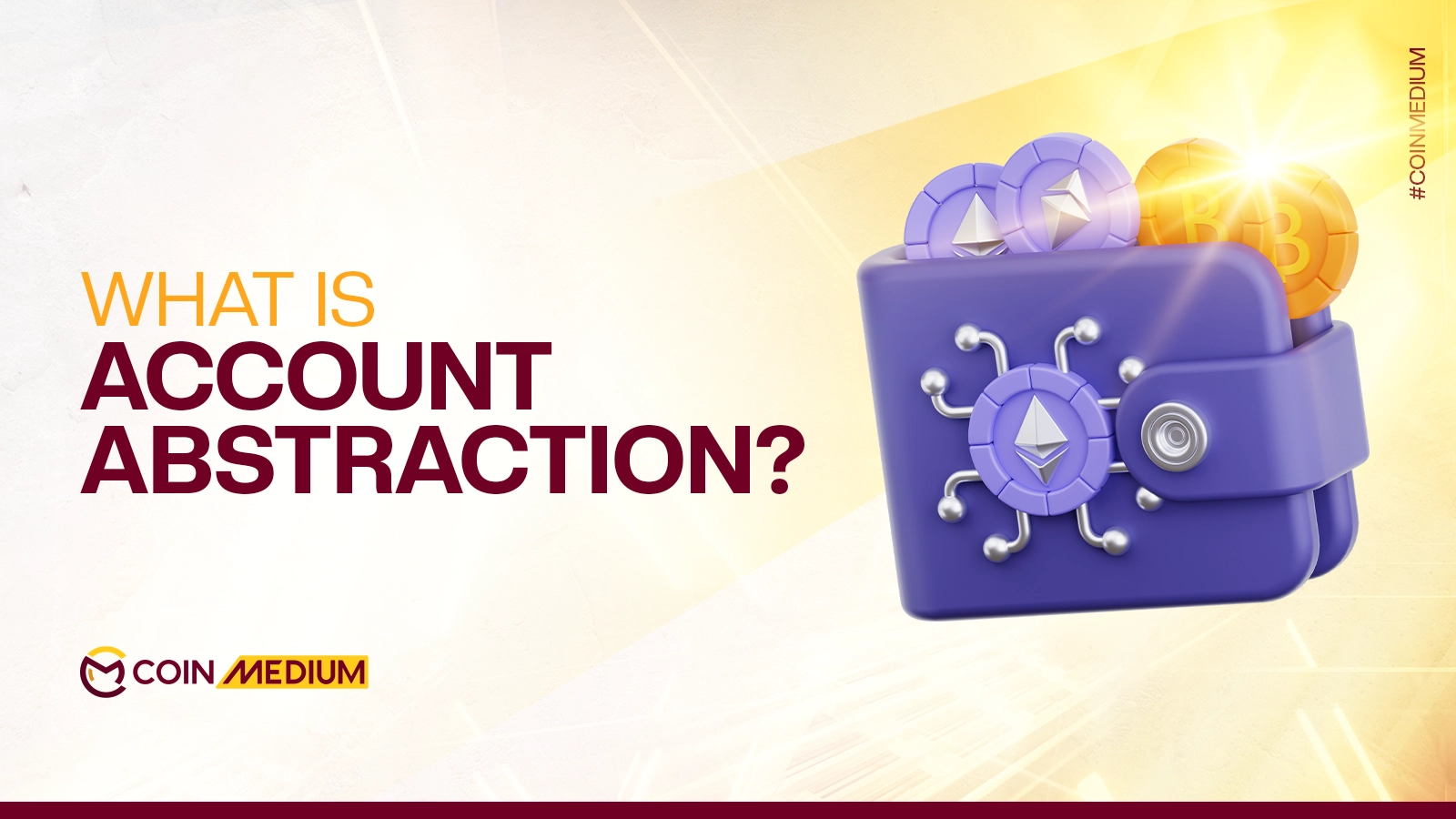
Account abstraction is rewriting these problems. It is a way to turn a crypto wallet into a smart wallet. And here is what most people do not realize: account abstraction is not just for specialized smart contract wallets. It works with the traditional crypto wallet already in use.
What Changed, and Why It Matters
Traditional crypto wallets work like safety deposit boxes with one key. You either have that key or you don’t. If you forget the key, then there is no “forgot password” button, no customer service line, and no backup plan. Computer scientists call these “Externally Owned Accounts,” but common people call them stressful entities.
What is a solution to this stress? Make wallets programmable. Give them some intelligence. By using account abstraction, your wallet stops being a simple lock-and-key system and becomes flexible enough to set its own rules: it may require multiple approvals for large transfers, may allow recovery through trusted contacts, may accept fees paid in any token, or may let apps cover transaction costs completely.
This Works for Your Existing Wallet Now
This started becoming possible in 2023. When Ethereum rolled out the ERC-4337 standard in March 2023, account abstraction only worked with purpose-built “smart contract wallets.” Companies like Safe and Argent built new products from scratch for use. But regular wallets—the MetaMasks and Ledgers most people actually have—could not participate in this technological feat. This changed in May 2025. Ethereum’s Pectra upgrade included EIP-7702, a technical standard with real practical implications. It lets traditional wallets temporarily turn on smart features when needed and then go back to normal operations.
What this means is that a user does not need to stop using their current wallet and start over. Traditional wallets can utilize account abstraction capabilities. Vitalik Buterin, Ethereum’s co-founder, has called account abstraction essential for bringing the next billion users to crypto. With the May 2025 upgrade, that vision finally extended beyond crypto enthusiasts.
The Paymaster: Someone Else Picks Up the Tab
The biggest improvement comes from something called a paymaster, which, basically, in simple terms, is a sponsor for the transaction fees. What is the solution to the issue of high gas fees? Certain apps used by a crypto investor or trader can cover this cost with a paymaster. Alternatively, the user can pay using the USDC stablecoin or any other cryptocurrency they already hold, instead of having to buy a specific cryptocurrency first.
These concepts are not theoretical. Major Web3 games already sponsor all in-game transactions. Players purchase items, enhance characters, and exchange assets without encountering any gas fees. The game company pays those costs as customer acquisition, the same way traditional mobile games offer free downloads.
Coinbase’s Smart Wallet covers fees for certain actions. Some DeFi protocols pay onboarding costs for new users. A few wallet providers are testing subscription models—pay $5 monthly for unlimited transactions. “We spent months building a game, and players were leaving because they hit a gas fee before even playing. Covering those fees costs us pennies. Losing players costs us everything,” says a person who runs a product at a Web3 gaming studio in Los Angeles.
There are two types of paymasters:
First are the sponsorship-style paymasters, called verifying paymasters. These let apps, companies, or services pay the gas fees for a user so that they can do transactions without spending any of their crypto. It is like getting a free ride: the app might cover the cost to make things simpler for new users, or they could pay with a credit card or subscription off-chain, and then a trusted signer approves it. Behind the scenes, the paymaster checks everything is legit (via a signature or rules) before covering the fees in ETH from its funds.
Token paymasters are the second type, and they are also called ERC-20 or token-based paymasters. These let a user pay gas fees using whatever crypto tokens they already have—like USDC, DAI, or other popular ones—instead of needing the chain’s native coin specifically. The system automatically handles the swap or deduction in the background: it takes the right amount of your tokens, covers the actual native gas cost itself, and everything feels seamless. No manual swapping or worrying about having the “right” coin is needed. ETH is commonly used in the context of paymasters, as ERC-4337 (the standard behind paymasters) is built specifically for the Ethereum Virtual Machine (EVM) ecosystem. But paymasters can be used for other blockchains, such as the BNB Chain and Polygon.
Security That Does not Require Memorizing Random Words
Beyond fees, account abstraction also improves one of crypto’s weakest areas—wallet security that depends on just one key. The old model is brutal in its simplicity. Lose the 12-word seed phrase, and the funds are gone forever.
Account abstraction introduces nuance where there was none before. A user can set up social recovery, where three trusted friends each hold a piece of the recovery mechanism. Lose access? Two of them can verify the identity and restore the wallet. No company holds the keys. No central authority gets involved. Just the people a user trusts.
Account abstraction also allows skipping the seed phrase altogether. Use biometric security—Face ID, fingerprints—instead of memorizing random words. A wallet can be programmed to require approval from multiple devices for transactions over a certain amount. Daily spending limits can also be set. The wallet can become as secure or as flexible as is needed.
Safe, one of the first major smart wallet platforms, has processed over $100 billion in transactions using multi-signature security, where several people have to approve important actions. Account abstraction brings these capabilities to regular users.
The Technical Machinery
One does not need a computer science degree to understand how this works, as the basic mechanism is very simple. Traditional transactions work directly: start an action, pay a fee, and it happens. With account abstraction, one creates what is called a “UserOperation”—basically a signed request describing what one wants to do.
That request goes into a special queue. Services called bundlers collect these requests from many users, package them efficiently, and submit batches to the blockchain. A verification system checks everything—valid signatures, proper permissions, and sufficient funds. Once verified, the action executes automatically.
Different blockchains handle this differently. Ethereum uses a parallel system with bundlers and a central contract called EntryPoint. Newer networks like zkSync and Starknet built account abstraction into their core design, so every account on these networks has these capabilities from the start.
The result is fascinating. The user can describe what they want, and the infrastructure handles the messy parts. Click “send USDC to a friend,” and the system manages fees, conversions, and execution without the need for a user to understand what is happening underneath.
What This Looks Like in Practice
Emma Li, a small business owner in Vancouver, started accepting crypto payments last fall using a smart wallet. When customers pay her, the funds arrive in USDC. When she needs to pay suppliers, she can send payments directly—no need to first swap USDC for ETH to cover gas fees.
For gaming, the transformation is even sharper. Traditional video games do not make players think about database queries when they buy a virtual item. Web3 games previously forced players to manually approve transactions, pay fees in a specific cryptocurrency, and wait for blockchain confirmation—all for buying a cosmetic hat. Account abstraction erases this gap. Players click buy, items appear, and the blockchain transactions happen invisibly. The game company might sponsor the fees entirely, bundle multiple actions into one transaction, or let players pay with whatever token they already earned in-game.
Adoption Is Accelerating
Due to such advantages, the adoption of account abstraction is increasing by the day, and the numbers tell their own story. Tens of millions of smart accounts now exist across Ethereum and its Layer-2 networks. Coinbase’s Smart Wallet added over a million users in its first few months. Safe has secured over $100 billion in assets.
Traditional finance companies are also paying attention. Several major banks have pilot projects exploring account abstraction for institutional crypto custody. The ability to set complex spending rules, require multiple approvals, and integrate with existing compliance systems makes smart wallets attractive for corporate use.
Wallet providers such as MetaMask and Argent and smart account platforms are also locked in fierce competition to deliver the smoothest, most intuitive onboarding and usage experience possible. Leading solutions now routinely bundle account abstraction features—such as gasless (sponsored) transactions, social recovery guardians, and biometric or passkey authentication—as standard, default capabilities rather than optional extras.
The Remaining Rough Edges
This notwithstanding, account abstraction has not solved everything. Smart transactions generally cost slightly more in gas fees than simple ones on traditional wallets, although sponsors often cover this cost. Secondly, smart wallet accounts can only process one transaction at a time, creating some delays, though bundling multiple actions is helpful at times.
Cross-chain functionality also remains tough. Moving assets between different blockchains still requires multiple steps and often involves bridge services that have fees and security risks. Some wallets have been able to implement account abstraction better than others. The user experience differs considerably depending on which wallet is being used and which blockchain network you are on. This inconsistency creates confusion for people trying to figure out what is actually possible.
Where This Goes Next
The roadmap goes beyond removing some friction. Developers are working on intent-based mechanisms, whereby the desired outcome is described, and specialized services compete to execute the intent efficiently and also cost-effectively.
AI integration is another frontier. Wallets are being developed to predict optimal transaction timing based on network congestion, automatically route transactions through the cheapest available path, and provide real-time security warnings about suspicious contracts.
Cross-chain account abstraction continues to be the pinnacle of technology. Imagine describing a complex action—take 30% of my portfolio, rebalance it across these three tokens, split the result between Ethereum and Polygon, and stake half of it—and having it executed seamlessly across multiple blockchains in one shot.
Account abstraction represents something larger than improved wallet technology. It acknowledges that the technical implementation of crypto, which may have excluded many people, buried the original vision of accessible financial tools for everyone.
Whether crypto achieves mainstream adoption remains uncertain. But account abstraction removes one of the biggest barriers. The wallets are getting smarter. Whether enough people care is the question that remains unanswered.