- You will understand what stablecoins are.
- You will be able to tell the difference between the types of stablecoins.
- You will be able to understand how they operate.
- You will see the role they play in the crypto ecosystem.
In the wild world of cryptocurrencies, where prices skyrocket or plummet overnight, stablecoins are those that stand out as the calm anchors in a stormy sea.
So, if you’ve ever wondered how to dip your toes into crypto without the rollercoaster ride of volatility, these digital assets might just be for you.
In this guide, we will explore what stablecoins are, how they operate, the types and what unites and differentiates them.
What is a Stablecoin?
Imagine a digital dollar that lives on the blockchain. That’s essentially a stablecoin. In other words, a stablecoin is a type of cryptocurrency engineered to maintain a steady value, typically by being pegged to a stable asset like the U.S. dollar, gold, or a basket of currencies.
Unlike Bitcoin or Ethereum, which fluctuate wildly based on market sentiment, supply, and demand, stablecoins aim for price stability, often hovering around $1 per coin. For instance, if you consider the stablecoin of the United Arab Emirates, 1 AE coin is equivalent to 1 AED.
Stablecoins essentially came about to solve volatility that comes with cryptocurrency. They bridge the gap between traditional finance and decentralized systems by allowing users to transact, save, or trade without constant fear of value erosion.
On the other hand, stablecoins often operate on blockchain networks, ensuring transparency, speed, and low fees compared to traditional banking wires. This is one of the primary reasons many countries embrace stablecoins and adopt them into their financial systems.
How do Stablecoins work?
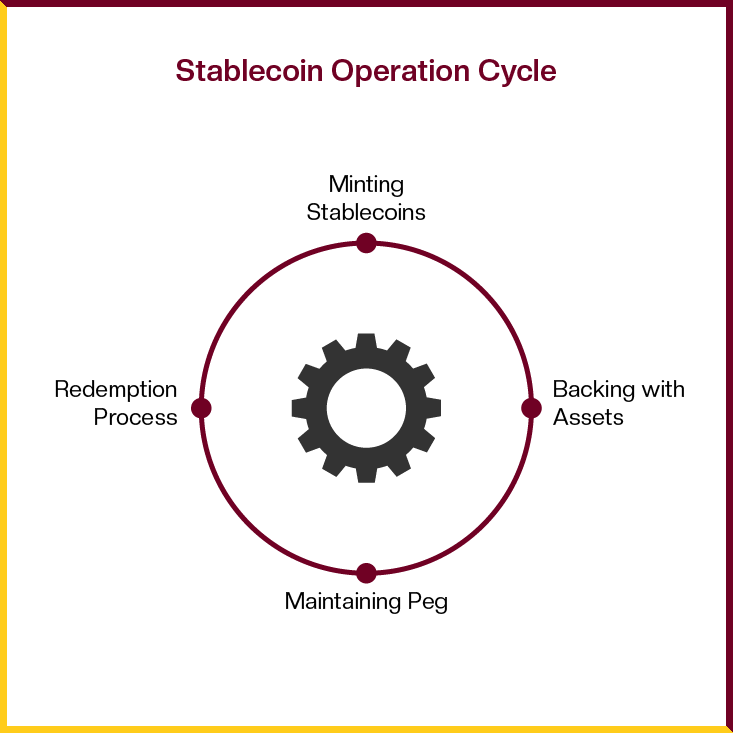
To put it in context, most stablecoins are issued by centralized or decentralized entities that hold reserves equal to the coins in circulation.
For every stablecoin minted, there’s supposed to be an equivalent asset backing it up. This peg is maintained through mechanisms like redemption. Redemption is where the stablecoin is swapped for the underlying asset or smart contracts adjust supply.
Popular examples include Tether (USDT), USD Coin (USDC), and Dai (DAI), which together dominate the market with billions in circulation.
Remember that stablecoins can be either collateralized or over-collateralized. It just depends on the type.
Collateral stablecoins are backed by assets like fiat currency, precious metals, or other cryptocurrencies equal to its value.
An over-collateralized cryptocurrency, meanwhile, has more collateral than the value of the issued tokens, for extra security and stability.
In essence, stablecoins democratize access to stable value in a digital form, making them ideal for everyday use in the crypto ecosystem.
What Are the Main Types of Stablecoins and How Do They Differ?
Stablecoins are not humans. Therefore not all stablecoins are created equal. They come in various flavors, each with unique backing mechanisms, risks, and use cases. Understanding these types is crucial for you to navigate this space.
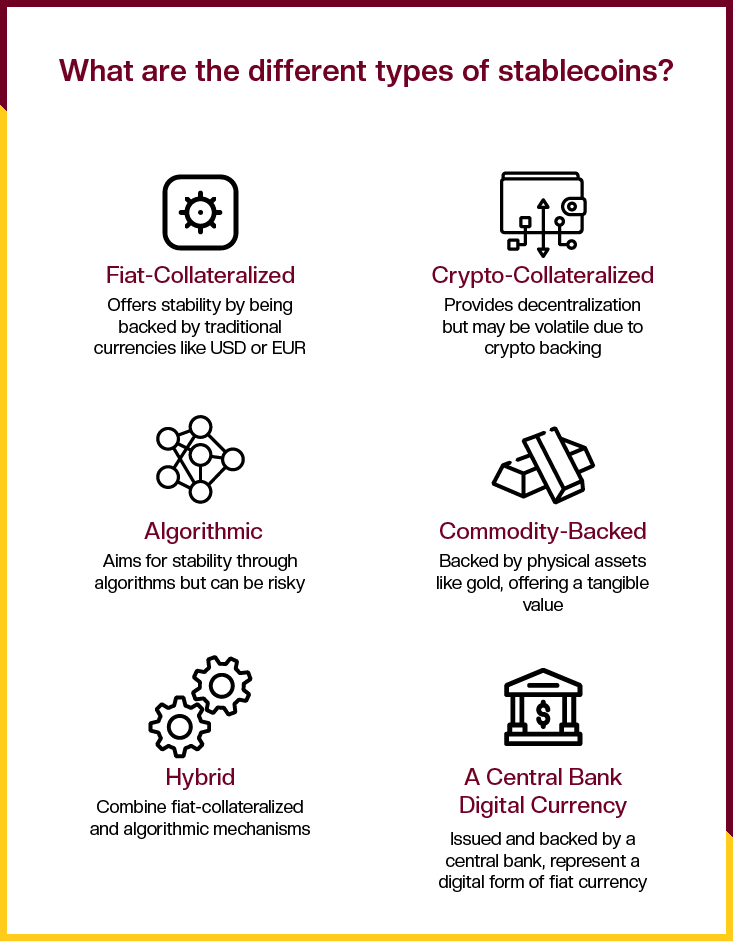
There are six main types of stablecoins: fiat-collateralized, crypto-collateralized, algorithmic, commodity-backed, hybrid and CBDCs’.
Fiat-collateralized stablecoins
Fiat-collateralized stablecoins are the most straightforward and popular. They’re backed by real-world fiat currencies, like the USD, held in bank accounts or treasuries. For instance, the USDT (Tether) and the USDC (Circle’s USD Coin) maintain a 1:1 peg by reserving an equivalent amount of dollars for every coin issued.
The difference lies in transparency and regulation. While the USDC is audited regularly, Tether has faced scrutiny over its reserves. These are centralized, relying on issuers to manage the collateral, making them easy to use but vulnerable to issuer default.

Crypto-collateralized stablecoins
Crypto-collateralized stablecoins, on the other hand, are backed by other cryptocurrencies, often overcollateralized to buffer against volatility.
The DAI, from the MakerDAO protocol, is a prime example: users lock up assets like Ethereum (worth more than the DAI borrowed) in smart contracts.
If the collateral value drops too low, it’s liquidated automatically. This decentralized approach differs from fiat-backed ones by eliminating reliance on banks, but it introduces crypto market risks. For instance, a sharp ETH drop could destabilize the peg.

Algorithmic stablecoins
Algorithmic stablecoins take a more innovative, hands-off route. They use algorithms and smart contracts to adjust supply and demand dynamically, without physical backing.
Terra’s UST, launched by Do Kwon (before its infamous 2022 collapse) minted or burned tokens based on arbitrage opportunities to maintain the peg. The key difference? No reserves mean higher risk of de-pegging if market confidence wanes, as seen with UST’s crash. They’re decentralized and efficient but have proven fragile in extreme conditions.

Commodity-backed stablecoins
Commodity-backed stablecoins are pegged to tangible assets like gold or silver. Pax Gold (PAXG) represents ownership of physical gold in vaults.
Unlike fiat or crypto variants, they offer exposure to commodities’ intrinsic value, appealing to investors hedging against inflation. However, storage and auditing add complexity, differentiating them from purely digital peers.
Hybrid Stablecoins
Hybrid stablecoins can combine fiat-collateralized and algorithmic mechanisms. However, they are less common than crypto-collateralized and algorithmic hybrids.
For instance, Frax USD (FRAX) is a primarily crypto-collateralized and algorithmic stablecoin. But it can incorporate fiat-backed assets like USDC in its collateral pool. On the other hand, sUSD from Synthetix blends crypto collateral with algorithmic elements.
Meanwhile, stablecoins may experiment with fiat reserves alongside algorithmic mechanisms to comply with regulations like the European Union’s MiCA, which regulates audited reserves.

A Central Bank Digital Currency (CBDC)
A Central Bank Digital Currency (CBDC) is issued and backed by a central bank. They usually represent a digital form of fiat currency like the digital euro.
Unlike decentralized stablecoins like sUSD, CBDCs are centrally controlled, ensuring legal tender status and is a direct liability of the central bank.
CBDCs aim for stability, financial inclusion, and efficient payments, with full government backing.
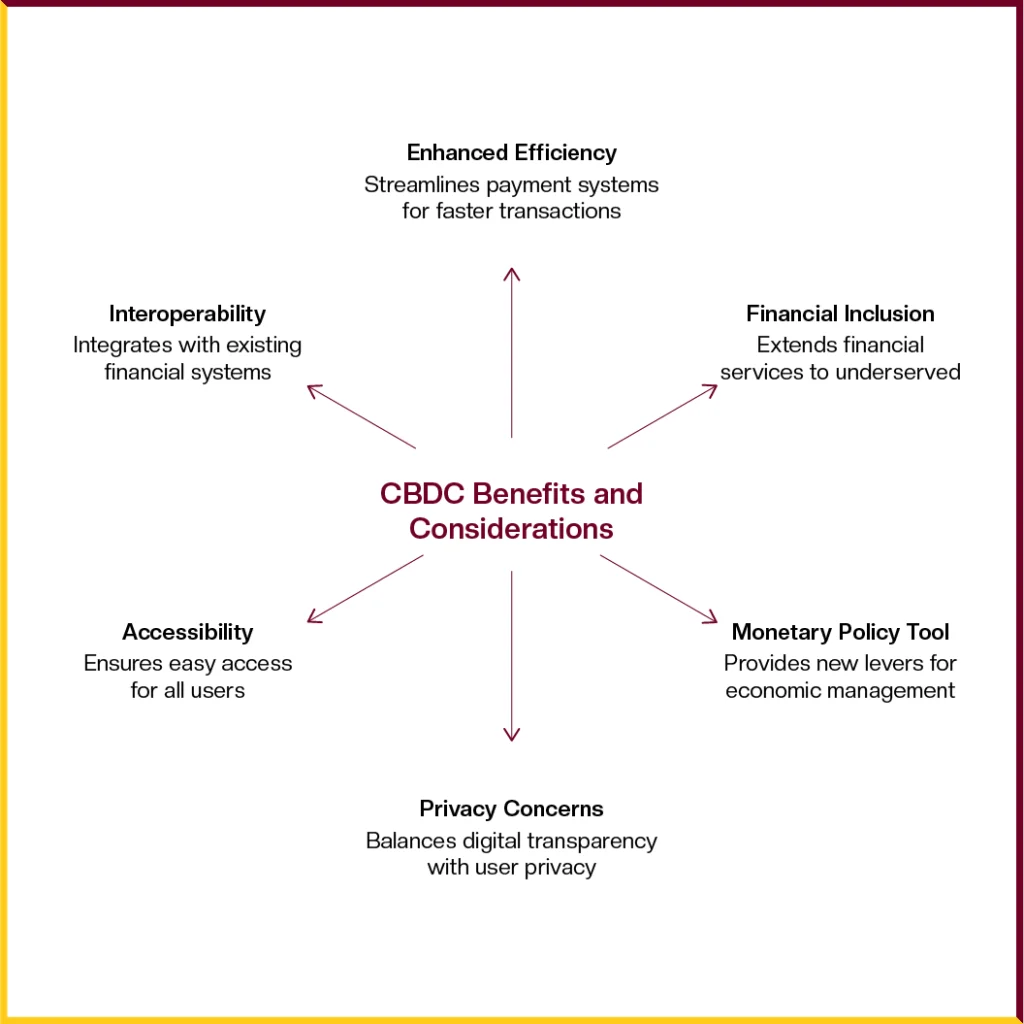
Each type of stablecoin balances stability, decentralization, and risk differently.

Why Are They Considered Less Risky for Crypto Investors?
If you are honest, Crypto investing experiences price swings turning fortunes upside down. However, stablecoins flip the script by offering safety against volatility.
For example, Bitcoin can drop 20% in a day, but a well-pegged USDT rarely deviates from $1, making it reliable and safe during market downturns.
By tying value to stable assets, stablecoins shield investors from volatility of the crypto market.
You could store value, earn yields through lending platforms, or use them for trading without constant price anxiety.
Moreover, many stablecoins are regulated or audited, adding that extra layer of trust. USDC, for example, complies with U.S. financial standards, reducing counterparty risks compared to unregulated tokens. Additionally, during a crash, investors can swap into stablecoins instantly, preserving capital.
That said, they’re not bulletproof. However, they are far less risky than other crypto assets.
How Might Stablecoins Impact Global Financial Transactions in the Future?
Looking into the future, it is no secret that stablecoins could revolutionize global finance.
For one thing they are already making international payments seamless and instant. They leverage blockchain’s borderless nature to facilitate instantaneous transactions.
Stablecoins are also set to integrate with traditional systems. Banks like JP Morgan and French banking giant Société Générale (SG) are working on the launch of a U.S. dollar-backed stablecoin.
Currently many unbanked populations in Asia and Africa are turning to cryptocurrency for payments without intermediaries. Stablecoins will further solidify this position without the added risk of volatility.
As regulations evolve within the European Union with MiCA and in the U.S. with the GENIUS Act which are specifically aimed at regulating stablecoins, they may even soon become the norm.
However, they are not without hurdles. There is still regulatory strain, loopholes and scalability obstacles that could tamper growth.
Yet, with daily volumes hitting $100 billion, stablecoins are poised to make finance faster, cheaper, and more accessible worldwide.
Whether you’re a newbie investor or curious observer, understanding them opens doors to smarter, safer engagement with blockchain.
Frequently Asked Questions
What is the oldest stablecoin?
The oldest stablecoin is Tether (USDT), launched in October 2014. Initially called “Realcoin,” it was created by Tether Limited and is pegged to the US dollar, backed by reserves. It remains the most widely used stablecoin by market capitalization.
Can stablecoins change in value?
Yes, stablecoins can change in value, though they are designed to maintain a stable price, typically pegged to an asset like the US dollar. While stablecoins are generally more stable than volatile cryptocurrencies like Bitcoin, they are not immune to value changes due to design limitations, market conditions, or external risks.
What makes a stablecoin stable?
Stablecoins achieve stability by tying their value to a reference asset or mechanism designed to minimize price volatility. This stability is achieved through asset backing, algorithmic adjustments, collateralization, transparency, arbitrage, and liquidity, but their effectiveness depends on design and market conditions.
Is there regulation governing Stablecoins?
Yes, stablecoins are subject to regulation, but the extent and specifics vary by jurisdiction, and the regulatory landscape is still evolving.
In the United States, The Securities and Exchange Commission (SEC) may classify some stablecoins as securities, especially if they promise returns or involve complex structures.
The Markets in Crypto-Assets (MiCA) regulation, effective June 2024, governs stablecoins in the EU. It classifies stablecoins as “asset-referenced tokens” or “e-money tokens”.
In the United Kingdom, The Financial Conduct Authority (FCA) regulates stablecoins as e-money or securities, depending on their structure.
Many countries focus on AML and Know Your Customer (KYC) compliance to prevent illicit use of stablecoins.
Which countries use stablecoins the most?
Stablecoin adoption is driven by factors like economic instability, inflation, regulatory clarity, and technological infrastructure. Based on available data up to August 18, 2025, Nigeria, India, United States, Turkey, United Arab Emirates top the list for highest usage.
What are the top 5 stablecoins?
The top five stablecoins by market capitalization in 2025, are as follows.
- Tether (USDT): ~$164.8 billion. A fiat-backed stablecoin pegged to the USD, widely used for trading and DeFi due to its high liquidity and adoption across exchanges. Backed by cash, U.S. Treasuries, and other assets.
- USD Coin (USDC): ~$63.9 billion. Issued by Circle, pegged 1:1 to USD, known for transparency with monthly audits and integration with traditional finance (e.g., Visa). Operates on Ethereum and other blockchains.
- Ethena USDe (USDe): ~$8.75 billion. A synthetic stablecoin, partially algorithmic, backed by crypto assets and designed for DeFi yield generation. Faces regulatory scrutiny for its structure.
- Sky Dollar (USDS): ~$4.8 billion. A newer USD-pegged stablecoin gaining traction in DeFi, backed by reserves, with growing adoption due to regulatory compliance.
- Dai (DAI): ~$4.3 billion. A decentralized, crypto-collateralized stablecoin by MakerDAO, pegged to USD via over-collateralized crypto assets (e.g., ETH). Popular in DeFi for its trustless nature.
Can you make money with Stablecoins?
Yes, you can make money with stablecoins, though they are designed for stability rather than high returns, so profits typically come from strategic use rather than price appreciation.
Where can I buy Stablecoins?
You can buy stablecoins like Tether (USDT), USD Coin (USDC), Ethena USDe (USDe), Sky Dollar (USDS), and Dai (DAI) through Centralized or Decentralized exchanges, depending on your location, preferences, and the regulatory environment
Is Bitcoin a Stablecoin?
No, Bitcoin is not a stablecoin. Bitcoin (BTC) is a decentralized cryptocurrency designed as a store of value and medium of exchange, with its price determined by market supply and demand.
Can a Stablecoin go above $1?
Yes, a stablecoin can go above $1, although this would be an exceptional situation. Although stablecoins are designed to maintain a 1:1 peg with its reference asset (e.g., USD), deviations occur due to market dynamics, supply-demand imbalances, or operational issues.
Are Stablecoins legal?
Stablecoins are legal in many jurisdictions, but their legality depends on the country, the specific stablecoin, and how it’s used.
Which Stablecoin is the best?
Determining the “best” stablecoin depends on your specific use case, priorities (e.g., stability, decentralization, regulatory compliance, or yield potential), and location.
Here are some factors to consider when choosing the best stablecoin for you:
- Stability: How well the stablecoin maintains its $1 peg.
- Liquidity: Availability and trading volume across exchanges.
- Transparency: Clarity on reserves or collateral backing.
- Regulatory Compliance: Adherence to laws, especially MiCA in the EU.
- Decentralization: Degree of control by a central entity vs. community governance.
- Use Case Fit: Suitability for trading, DeFi, payments, or yield generation.
Can Stablecoins replace Visa and Mastercard?
Stablecoins have the potential to challenge Visa and Mastercard in certain use cases but fully replacing them is unlikely in the near term due to differences in infrastructure, adoption, regulatory hurdles, and consumer trust.