

- The evolution of the internet is classified as the web. The earliest phase of the internet is called Web1 and the internet we are on right now is called Web2.
- The first phase of the internet was not interactive like it is today. People could only watch and read on the internet. Today we are able to perform a wide variety of tasks on the internet.
- Web3 is the new age internet where every activity that a user performs is controlled by him/her and the system is fully decentralized. This means that this web is user owned and not fully managed by traditional tech giants that we have today.
Brief History Of Web1
Before we dive deep into the history of web3 and the current internet, let’s take a look at the earliest days of the internet.
Web1 is known as the static web as users could only read the content on the internet. The internet was primarily simple html pages – these are plain looking websites with basic typeface (fonts) and limited functionality.
Real-time chat, comments sections, or personalized user experiences were absent.
The primary purpose of Web1 was to make information widely accessible. It was seen as a vast digital library or a collection of online brochures. Businesses put up basic information about their products and services, universities share research, and individuals create personal “home pages.”
The first ever directory to come into existence was Yahoo. Besides this, static web pages on Google were dime a dozen.
Alphabet, Meta & More: Taking Static To Social
Web2 marks a pivotal shift in the internet’s evolution, moving from the “read-only” static web to a read and write web. The Web2 phase of the internet also meant maturing of software programs that ran in the web1 era.
The Web2 era started to blossom more after platforms like Facebook and Youtube launched in 2004 and 2005. Before the tech giants that we know today, the main contenders of the new web were WordPress and Wikipedia.
User generated content is now a huge industry and is dominated by firms like Google, Youtube, Meta (Instagram, Snapchat, Whatsapp & Facebook), Apple and Amazon to name a few.
The advent of Web2 paved the way for users to become creators across the web. Platforms like Facebook, Instagram and Youtube have created a surprisingly wide network of creators as the user interface of these applications are extremely simple and user friendly.
Web2 also saw an explosion in the use of smartphones, and most of internet use was through mobile apps and hardware built by these companies. While this meant more people could participate in the internet, it also meant the internet was becoming increasingly controlled by the leading digital platforms.
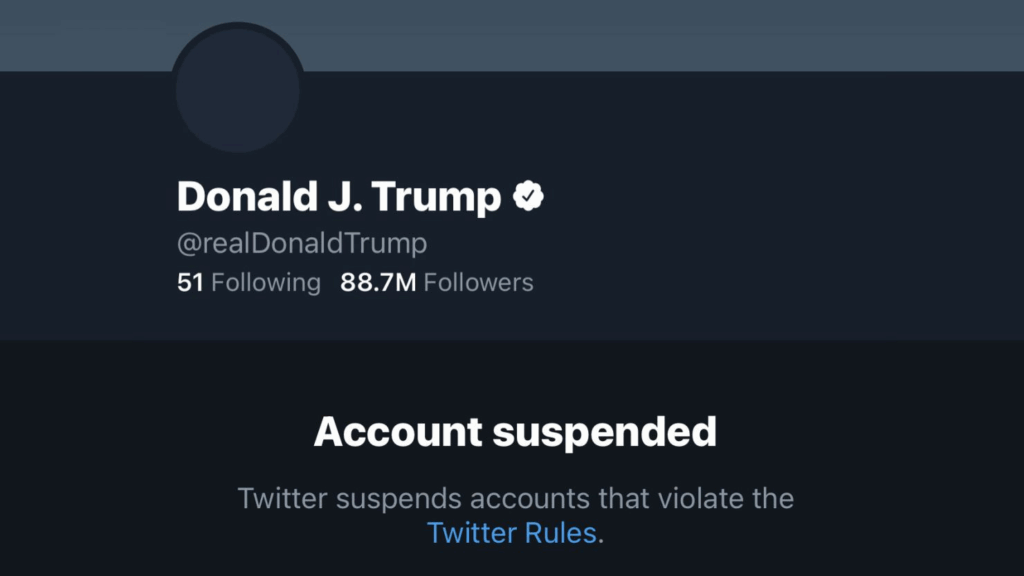
In the centralized internet we know today, Apple takes a 30% cut on all paid-app downloads and in-app purchases. Web2 platforms like Twitter can de-platform POTUS.
What is Web3?
Web3, the future internet we’re moving towards, is essentially the decentralized internet. Under Web3, the internet is shared online and governed by the collective “we,” rather than the centralized entities. Tech giants like Meta, Microsoft, Google & Tiktok are centralized Web2 platforms.
The decentralized web is a concept for a new iteration of the World Wide Web that incorporates principles such as decentralization, blockchain technologies, and token-based economics. It aims to shift power from centralized entities (like large tech companies) back to individual users.
The Web3 world is one that has open-source protocols at its foundation. Platforms like Mastodon, Audius, Brave are some of the known Web3 platforms.
Unlike Web2 where data and applications are largely controlled by central servers owned by companies (e.g., Google, Facebook), Web3 distributes data and applications across a network of computers. This is often achieved using blockchain technology, which acts as a distributed, immutable ledger.
How does a blockchain work?
A Blockchain is an immutable, digital ledger that facilitates the process of recording transactions and tracking assets in a network; it is updated and shared across many computers in a network.
The blocks confirm the exact time and sequence of transactions, and the blocks link securely together to prevent any block from being altered or a block being inserted between two existing blocks. Each additional block strengthens the verification of the previous block and hence the entire blockchain.
Instead of being stored on a single, central server, copies of the entire blockchain are distributed across a vast network of computers called “nodes.” These nodes are essentially computers. The best example of a peer to peer network that uses nodes (computers of peers) is BitTorrent.
How Does Web3 Work?
Imagine the internet we use today (Web2) as a big library where all the books (information) are stored by a few big companies (like Google or Facebook) in their own buildings. When you want a book, you ask them, and they give it to you. They also keep track of what books you read, for how long, and sometimes even charge you for access or use your reading habits to sell you things. This means that the shared library where you read and interact has your data like name, email and phone number among other things. This data is oil for tech giants to fuel massive revenue from you.
Now, let’s take the library example and understand how Web3 works. Instead of one company holding all the information, think of it as a huge, shared digital notebook (the blockchain) that everyone on the network has a copy of. Every time something important happens (like you making a transaction or creating a piece of content), it’s written down in this notebook, and everyone can see it. Once something is written, it’s incredibly hard to change or erase, making it very secure and transparent.
How Do Applications Work In Web3?
Now, let’s understand how applications work in Web3. As we know, applications that we use have some functionalities that require the user and the server behind the app to interact. Think about every time you book a cab, every time you save that video or make a payment through a bank app. Each activity requires you to make a request using the interface.
What Is A Smart Contract?
In a decentralized web this is replaced by a piece of code called ‘smart contract’. Smart contracts are programs (chunks of code) stored on a blockchain that automatically executes when predetermined conditions are met.
Smart contracts are typically used to automate execution of an agreement so that all participants can be immediately certain of the outcome, without any intermediary’s involvement or time loss. Smart contract applications include everything from games to logistics tools to DeFi applications.
How Do Smart Contracts Work?
Smart contracts are self-executing agreements with the terms of the agreement directly written into lines of code. They run on a blockchain, which means they are immutable (cannot be changed once deployed) and transparent. The way smart contracts function is quite simple.
The parties involved agree on the terms and conditions of their agreement, just like in a traditional contract. However, instead of legal jargon, these terms are translated into computer code.
Developers write the smart contract code using specialized programming languages like Solidity (for Ethereum) or Vyper. This code defines the rules, conditions, and actions that will be executed.
For example, in a sales contract, the code might specify: “If Buyer A pays X amount, then Seller B transfers ownership of Item Y.”
The smart contract continuously monitors the blockchain or other credible information sources (through “oracles” for external data like weather or financial market prices) for the predefined conditions to be met. Oracles are basically relayers that take requests from blockchain to real world applications as blockchains work in silos.
What Are dApps & How Do They Work?
dApps stand for decentralized applications. These applications run on the blockchain technology rather than centralized servers. So how do they work? These dApps are governed by a network of computers – nodes. Because there’s no single point of control, no single entity can completely shut down the dApp, censor content, or manipulate data. The network collectively maintains and verifies the application. dApps interact with smart contracts to relay information and initiate and complete transactions between two or more parties, anonymously.
In dApps, interactions often happen directly between users or between users and smart contracts, without a central authority mediating the process. This creates a more democratic and transparent interaction system.
While the backend is decentralized, dApps often have a user-friendly frontend interface that may resemble traditional web applications. Users can access these interfaces through web browsers, often by connecting their cryptocurrency wallet.
Following is a diagram of how Audius, a music streaming service on blockchain works in the real world.

The first step starts with an artist, producer, or creator who decides to share their music on Audius. Instead of sending it to a traditional record label or a centralized streaming service like Spotify, they upload it directly to the Audius network.
When music is uploaded, it’s not stored on one company’s server. Instead, it’s broken into pieces and stored across many different computers (called “nodes”) around the world that are part of the IPFS network. This makes the music file highly resistant to censorship and ensures that even if one computer goes offline, the music is still available from others. It’s like having many copies of your file in many different places, instead of just one.
Once the music file is safely stored on IPFS, important information about that song – who made it, what it’s called, where on IPFS it’s located, etc. – is recorded on a blockchain. This record is permanent, transparent (anyone can see it), and tamper-proof. This is crucial for proving ownership and ensuring artists get credit and potentially royalties.
When you search for music, special computers called “Discovery Nodes” spring into action. They’ve been constantly scanning the blockchain for all the song information (the metadata). They organize this data so that when you type in a song title or artist name, they can quickly find the relevant information, including where on IPFS the actual music file is located.
Once the Discovery Node finds the music’s information, the Audius platform can then pull the music file directly from the decentralized IPFS network and stream it to your device.
Final Thoughts
Web3’s scope is vast and ambitious, aiming to fundamentally re-architect how we interact with the internet. However, Web3 also faces some significant challenges.
Web3 applications can be complex and intimidating for mainstream users, requiring better onboarding and more intuitive interfaces. The decentralized nature of Web3 presents challenges for existing regulatory frameworks, leading to legal ambiguities and potential restrictions.
While blockchain is inherently secure, vulnerabilities in smart contracts or user errors (e.g., losing private keys) can still lead to significant losses.