

- What is a fork in a blockchain?
- What is the main difference between a hard fork and a soft fork?
- Why can a hard fork create two separate cryptocurrencies?
- How does a soft fork avoid splitting the network?
- Why do blockchains need forks in the first place?
Cryptocurrencies run on code. And just like your mobile apps or computer programs, that code sometimes needs fixing or updating. But updating a blockchain is not like updating the phone. It’s more like trying to get everyone in a city to agree on changing the speed limit while people are still driving around and not listening.
Blockchains face this tricky problem when someone wants to change how they work. Cryptocurrencies run on thousands of computers spread all over the world, and all those computers need to agree on changes. To solve this problem easily, the industry uses forks—the way blockchains can evolve without breaking or changing everything.
What Exactly Is a Fork?
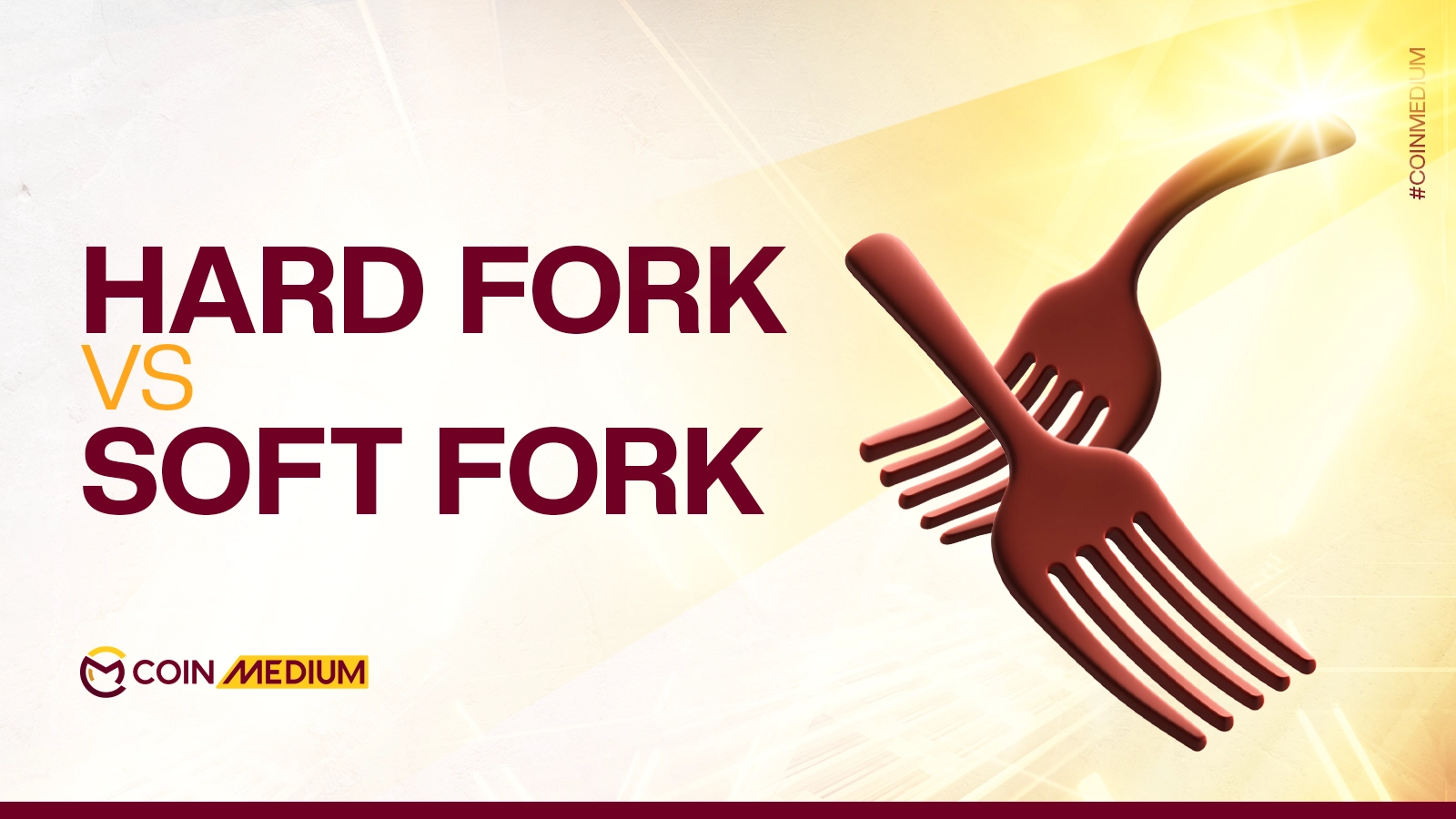
A fork happens when someone changes the blockchain’s rules in a way that affects how the whole network operates. Think of it like a fork in the road where the path splits.
Every blockchain has specific rules. Rules about checking transactions. Rules about adding new blocks. Rules about how computers on the network agree with each other. Change these rules and you’ve got yourself a fork. The big question is—will the old version and new version still get along? Or are they going separate ways completely?
There are two types: hard forks and soft forks. The main difference is backward compatibility. Can the old software still talk to the new software?
Hard Forks: The Clean Break
A hard fork is a permanent split. The changes are so big that computers running the old rules can’t even recognize what computers running the new rules are doing.
Picture a town that decides to completely rewrite all its laws. Some people accept the new laws and move forward. Others say no thanks and stick with the old laws. That’s basically what happens with hard forks. If enough people refuse to upgrade, you end up with two separate blockchains.
Bitcoin Cash in 2017 is the perfect example. Some folks wanted Bitcoin blocks to be bigger so they could process way more transactions. Other folks disagreed. The community argued about it and couldn’t find middle ground. So the bigger-block crowd just made their own version—Bitcoin Cash. Now we’ve got Bitcoin and Bitcoin Cash. Two completely different coins. Each one went its own way from that split point.
The Ethereum blockchain too has undergone a hard fork. It happened when the DAO, a decentralized venture fund that raised over $150 million in Ether, was hacked on June 17 via a reentrancy bug. An attacker took roughly $50–60 million in one of crypto’s largest thefts.
This sparked a debate among the worldwide Ethereum community: should the blockchain’s ledger be changed to reverse the theft, or should the principle of “code is law” be upheld at all costs?
After weeks of heated discussion, developers, miners, exchanges, and everyday users put the question to a community vote.
On July 20, 2016, most of the community voted for intervention.
That day, Ethereum executed a hard fork—a permanent divergence in the blockchain—redirecting the stolen funds to a recovery contract so original investors could reclaim their Ether.
The new chain quickly gained support from the vast majority of users, miners, and exchanges. It became the Ethereum (ETH) that mainly powers the ecosystem today.
A minority of the Ethereum community rejected the fork and wanted to continue on the original, unaltered blockchain. It got renamed Ethereum Classic.
This fork is a milestone in cryptocurrency history. It became a focal point of governance and community consensus in the world of decentralized finance.
The hard fork did not delete or rewrite history. It simply added a new rule for everything after that one block—and most of the world decided to follow the new rule. That single choice created two separate, living blockchains that still exist side by side.
Hard forks can be of two types. Contentious ones happen when the community cannot agree on the direction. Everyone splits up. Planned ones happen when basically everyone’s on board with the upgrade and they all move together to the new version.
Soft Forks: The Backward-Compatible Update
Soft forks are different. They change things, but old software can still work with new software. Computers running the old rules can still participate and recognize what is happening under the new rules, even if they don’t fully get it.
Think about adding an extra lane to a highway. This extra lane is also going in the same direction as the old one. Cars from the 1990s can still drive on the old lanes just fine. Newer cars can use that extra lane too. The highway does not fundamentally change, but it just got an upgrade.
Soft forks typically make rules tighter, not looser. Things that used to be allowed are not allowed anymore. But they do not introduce anything that would confuse the old system.
Bitcoin’s 2017 SegWit fork is a good example of a soft fork. This carefully designed fork altered how transaction data is stored in the Bitcoin blocks. By taking out the witness (signature) data from the main transaction portion of the block, SegWit increased the block’s usable capacity and, in turn, made it possible for more transactions to fit into each block. This also resolved several long-standing technical issues, including the transaction malleability bug.
Since it was implemented as a soft fork, it was backward-compatible. Nodes that did not upgrade validated and produced blocks as per the old rules. Upgraded nodes gained access to the new efficiency and security improvements.
SegWit remains the best example of a successful, non-contentious soft fork—a rare moment of technical progress that strengthened Bitcoin without fracturing its network.
To be successful, soft forks just need most miners to upgrade. Once you have got enough mining power supporting the new rules, those rules basically become the standard across the network.
The Key Differences
The main thing is compatibility. Hard forks are risky. They can accidentally (or on purpose) split the network into two competing chains. Examples are Bitcoin/Bitcoin Cash and Ethereum/Ethereum Classic. Soft forks avoid this mess by keeping everyone on one chain.
Coordination is totally different too. Hard forks need basically everyone to upgrade together if they want to stay on the same chain. Soft forks just need most of the participants to agree.
Hard forks let you make massive changes, though. Want to completely redesign how the protocol works? Add brand new features? Fix something broken at the foundation? Hard forks can do that. Soft forks are limited—they can only make existing rules stricter. They cannot add completely new things. Though certain changes can be made.
Why Pick One Over the Other
The choice depends on what you are trying to do and whether people support it.
Hard forks make sense for huge upgrades. Ethereum moving from proof-of-work to proof-of-stake? This needed a hard fork. The change was too fundamental. Soft forks work better for smaller tweaks that don’t require everyone to update immediately.
Bitcoin folks prefer soft forks, as they have lower chances of splitting. The Ethereum community has been fine with hard forks. They see them as necessary for moving fast.
What is the verdict?
Forks are how blockchains change over time. Understanding this matters if you hold crypto. Neither type is automatically better. They are tools for different jobs. The tricky part is getting thousands of strangers scattered around the world to agree on anything. That is the real paradox. Blockchains were designed to never change. But sometimes they have to change, or they might just perish.