

- Every blockchain action consumes energy: Sending coins, minting NFTs, or using DeFi apps all require computational power. .
- Gas fees cover this cost: These fees ensure that blockchain networks like Ethereum can process, validate, and secure transactions. .
- Fees vary with demand: Sometimes gas costs only a few cents, but during heavy network usage, they can rise to several dollars or more. .
- Gas fees also protect networks: By attaching a cost to each transaction, they prevent spam and keep blockchain systems efficient and secure. .
- Globally, regulations around crypto have begun to tighten.
- Globally, regulations around crypto have begun to tighten.
If you’ve ever made a crypto transaction, whether it’s sending tokens, buying an NFT, or using a decentralized exchange, you’ve probably noticed something transaction fees, or gas fees.
For many beginners, it feels confusing and sometimes even frustrating. Why do we have to pay extra just to move or swap digital assets?
In this report, we’ll break down what gas fees are, why they exist, and how they work. We’ll explain the technology behind them, focusing on blockchain networks like Ethereum, where these fees play a big role in keeping the system secure and functional. We’ll also explain why sometimes they cost just a few cents, while at other times they can skyrocket to several dollars, or even more.
Finally, we’ll discuss how developers and blockchain projects are working to make gas fees cheaper and more predictable. By the end of this article, you’ll have a clear picture of why gas fees matter, what affects them, and what the future might hold.
What are Gas fees?
Transactions on a blockchain need computational energy to be executed. Every action you take on the blockchain such as; sending coins, minting NFTs, or using DeFi apps, requires a certain amount of computing power. Gas fees cover the cost of that power. So accordingly, the more complex the transaction, the more gas it consumes.
In simple example; If you use a blockchain like Ethereum to send crypto, swap tokens, or interact with a smart contract, you need to pay what is called a gas fee.
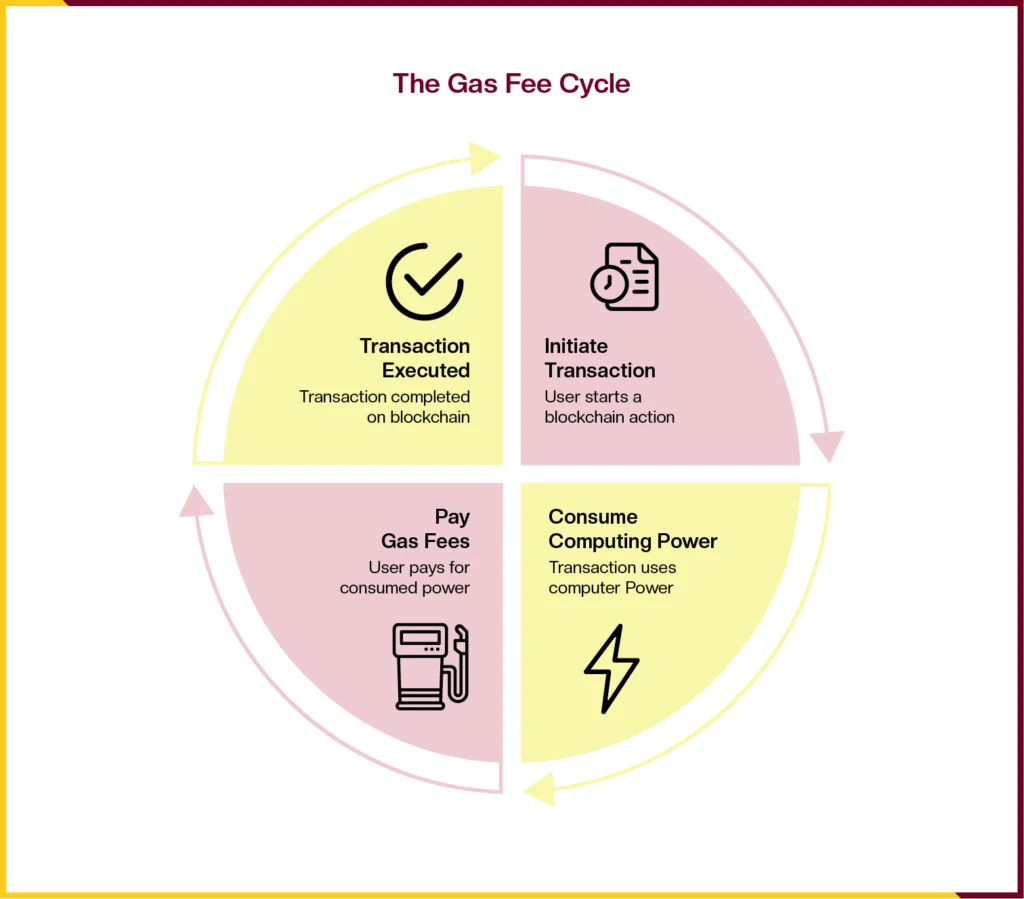
It’s more like the gas fees for the car’s fuel that keeps the engine running. So basically you pay a gas fee, so the blockchain network can process and confirm your transaction. Without this fee, the network’s computers (which are called miners or validators) would have no reason to spend their time and energy making sure your transaction is valid.
Gas fees also help keep the blockchain safe and efficient. If the network is very busy, fees usually rise, because many people are competing to have their transactions processed quickly. Users who are willing to pay higher gas fees get their transactions confirmed faster, while others may have to wait a little longer. This system is secure against spam and ensures that the network stays secure and functional.
How Do Gas Fees Work?
Every action on a blockchain requires a certain amount of computational steps, known as “gas units.” The more complex the action, the more gas it consumes.
So, in short, a simple transfer might use less gas than interacting with a DeFi protocol that runs multiple operations at once.
The actual fee you pay is determined by multiplying the gas units your transaction requires by the gas price. The gas price is usually measured in a small fraction of cryptocurrency (for Ethereum, it’s called gwei, which is a tiny unit of ETH). When the network is busy and lots of people are trying to get their transactions confirmed at the same time, users often raise their gas price bids to get priority, which pushes fees higher. On normal days, fees can be much lower.
Another important factor is the blockchain’s rules. For instance, Ethereum uses a system called EIP-1559, where each transaction pays a base fee (which is burned, or permanently removed from circulation) plus an optional priority fee (a tip to incentivize miners or validators to process your transaction faster). This mechanism helps keep fees more predictable, but they still rise when the network is congested. In short, gas fees are like a marketplace: the more demand there is to use the blockchain, the more you have to pay to get your transaction through quickly.
Ethereum has a system called EIP-1559. Which is a perfect example of how gas fees work, Here’s how it works:
- Every transaction has to pay a base fee, which is a small amount of ETH that gets “burned” (permanently destroyed).
- You can still add a priority fee, it’s more like a tip, to encourage miners or validators to process your transaction faster.

When the network is very crowded, and lots of people are trying to use it at once, the fees can still go up, because users compete by paying more to get their transactions confirmed first. To make it simple: a huge load means higher gas fees.
Why Do Gas Fees Matter?
Gas fees also help protect the network from being overloaded or spammed. Just imagine if it were free to send unlimited transactions, that would give the chance to anyone to flood the system with millions of useless actions and slow everything down for everyone else. By attaching a cost to each transaction, gas fees make sure people only use the network when they really need to, which helps maintain order and stability.
For users, gas fees are a reminder that blockchain resources are limited. Exactly like roads get crowded during rush hour, blockchains can only handle a certain number of transactions at once. So, paying gas is like paying for a fast-lane pass, it gives your transaction a better chance of being processed quickly. This system ensures fairness, keeps the blockchain safe, and supports its long-term sustainability.