

- What is the mempool, and why does every blockchain node maintain its own version of it?
- How do miners choose which Bitcoin transactions to include in a new block?
- Why are higher gas fees prioritized?
- What kinds of MEV (Maximal Extractable Value) attacks happen on DEXs?
- What solutions exist to help traders avoid mempool-related losses?
Have you ever tried to send Bitcoin to a friend and wondered why it is not instantly transferred? You click “send,” and then you wait. The transaction does not instantly get processed, leaving you to wonder if something went wrong. So, what’s causing the holdup?
Contrary to what many think, sending Bitcoin is not like sending a text message. That “send” button is just the beginning of its journey, not the end. Before any funds officially change hands, the transaction must be validated and get permanently recorded on the blockchain, a process that takes a bit of time.
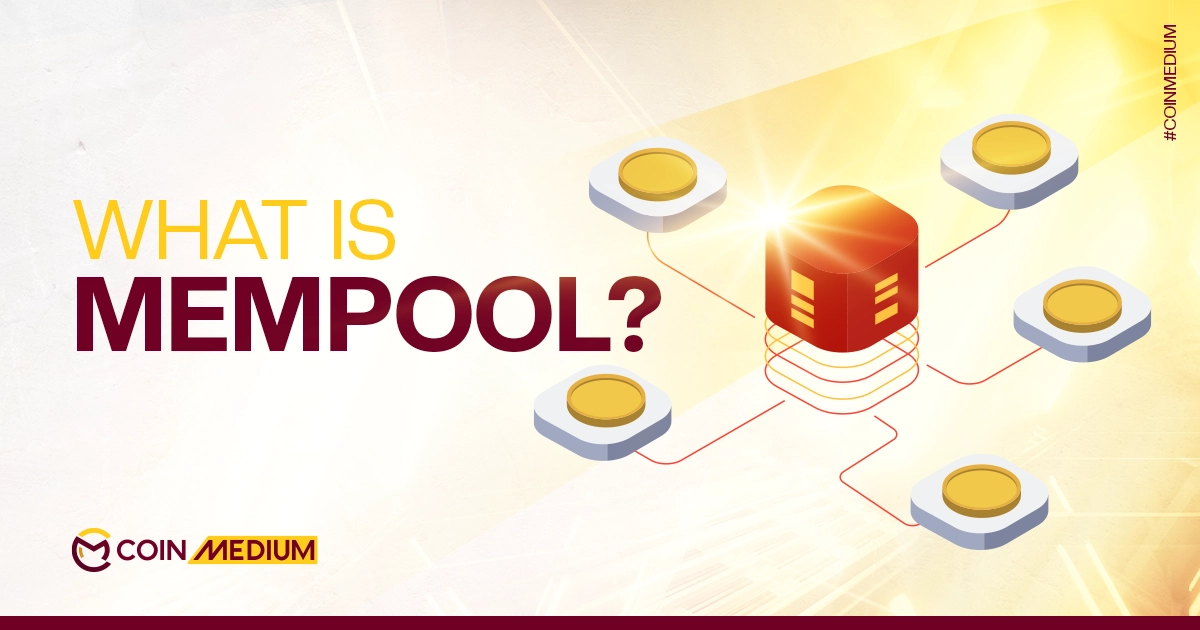
Here is a look at what happens. When you initiate a transfer, you are essentially creating a digital instruction to move a specific amount of Bitcoin from your address to another. This instruction is then broadcast to the vast, decentralized network of computers that power Bitcoin. From there, your transaction lands in a digital waiting area known as the “mempool.”
Think of the mempool as a bustling airport terminal during the holiday period. Your transaction is a passenger waiting in a long security line, one among thousands. Some passengers—those who attached a higher transaction fee—have a priority boarding pass. They get through the gate first when a new block (or “flight”) is confirmed. Those who paid a lower fee are in the general boarding group; if the block fills up, they will have to wait for the next block (or the next flight).
The bottom line? Your funds are not lost. They are simply waiting in a mempool for clearance.
What the Mempool Actually Does for Bitcoin
Short for “memory pool”, mempool is essentially Bitcoin’s digital waiting room—the place where every unconfirmed transaction waits until it gets the green light (validation). And here’s something that might surprise you: every single computer, or node, that helps run the Bitcoin network keeps its own version of this waiting list.
Now, this is where things get interesting. Bitcoin’s validation system is run by miners who compete to decide which transactions get permanently added to the blockchain. They do this by running powerful computers in a global race to solve incredibly complex cryptographic puzzles (a process called proof-of-work). The first miner to solve the puzzle wins the right to create the next block and, as a reward, collects all the transaction fees from the transactions they include, plus a fixed subsidy of the new bitcoins minted during proof-of-work.
But it is not a simple first-come, first-served line. Miners are doing their work to earn maximum revenue. When they look at the mempool, they are looking for the best returns or rewards on their effort. Every Bitcoin transaction comes with a fee that a user needs to pay. Miners have a simple rule of thumb: they prioritize the ones offering the highest fee (for the amount of data they will consume to be validated). Basically, it is a pure free market at work, where a higher transaction or gas fee gets priority (most times).
So, what happens when a transaction is initiated? It arrives in a mempool, one among thousands of others. A miner, looking to fill a limited 1MB block, scans the pool and picks the most profitable bundle of transactions that will fit. Then, the real competition begins. Miners across the network compete to solve the cryptographic puzzle that will seal that block. The winner adds their new block to the chain, the transactions inside are officially validated, and like that, the Bitcoin transaction is completed.
Grabbing the highest-paying transactions isn’t always optimal, though. One large transaction paying $30 might occupy more space than five smaller ones paying $10 each. Miners run calculations to pack blocks as profitably as possible.
Most miners join pools nowadays, which means combining the computing power of thousands of nodes and splitting the rewards. These pools run sophisticated monitoring systems tracking global transaction patterns. Smart operations watch for congestion. When the mempool fills up a lot and the panic of users (who have been waiting long) raises the fees, miners are said to make a lot of money. Bitcoin’s busiest periods have seen the mempool swell past 100,000 pending transactions, with fees hitting $50 or more. Some pools cut special deals with major exchanges, offering priority processing for steady transaction flow.
Blockchain operates exactly as designed here—a free market where everybody competes for limited space. Advocates talk about democratized crypto, but the mempool creates an invisible two-tier system. Some users buy their way to the front by paying extra. Everyone else waits.
The Waiting Pool is also a part of decentralized trading
Apart from the Bitcoin validation process, the mempool concept also applies to every blockchain handling unconfirmed transactions of proof of stake on all DEX-compatible networks—Ethereum, Binance Smart Chain, Polygon, Arbitrum, Solana, and some others. For any DEX like Uniswap or PancakeSwap, your transaction enters the public mempool.
The problem is that the bots on these DEXs are designed to exploit you while your transactions wait in the mempool. These bots/programs scan mempools constantly across networks, hunting for profitable trades to front-run. For instance, if you are buying some token on Ethereum, a bot spots your pending transaction and immediately places its own buy order with a higher fee, jumps ahead, drives up prices, and then sells right after yours goes through. You pay more than expected. The bot pockets the difference.
Then there’s MEV—Maximal Extractable Value—to watch out for. Miners or validators deliberately reorder transactions for profit. They spot your DEX trade in the mempool and “sandwich” it between their own trades, exploiting you as an investor. Technically, this is all legal in the crypto industry. It may feel like getting pickpocketed in broad daylight while everyone watches.
Ethereum’s mempool turns absolutely cutthroat during NFT drops or popular token launches. Gas fees may hit $300-400, sometimes even higher as buyers desperately try to ensure that their transaction is getting processed. Professional traders run their own nodes, getting transactions into validators’ mempools microseconds faster than competitors. Those microseconds are worth thousands.
The same thing happens on Polygon blockchain during high-traffic events, in Arbitrum during popular airdrops, and in Solana when new projects are launched.
Researchers estimate bots and MEV extractors pull billions annually from regular traders who don’t understand mempool mechanics across these blockchains. An investor might lose 2-3% of the trade value to front-running without noticing because they think it’s normal slippage.
Some solutions are emerging, thankfully. Many DEXs offer private mempools or direct routing to validators now. Flashbots and similar services let a buyer submit transactions through private channels, bypassing the public mempool entirely. Bots can’t front-run what they can’t see. A buyer may pay slightly higher fees for privacy, but it averts getting sandwiched.
Some newer blockchains have built-in MEV protection using encrypted mempools where transactions stay hidden until confirmed. As per experts, whether this solution will work long-term remains to be seen.
The mempool seems like a boring technical feature that only developers care about. But it is actually the engine driving every blockchain transaction. Understanding it explains why the crypto transfers are sometimes instant and sometimes very slow. Why do fees fluctuate wildly? Why does a buyer occasionally get worse prices on DEX trades than what the interface showed?
Industry experts say that buyers can time transactions during off-peak hours or use private mempools for important trades to avoid some losses related to mempool. At least a buyer should understand what’s happening when things inevitably go wrong, and in crypto, things go wrong many a time, and nine times out of ten, the mempool’s involved. Whether the chain uses proof-of-work like Bitcoin or proof-of-stake like Ethereum, BSC, Polygon, and Arbitrum, the rule is universal: higher fees mean priority inclusion. Always check a gas tracker and choose a competitive fee to avoid delays.