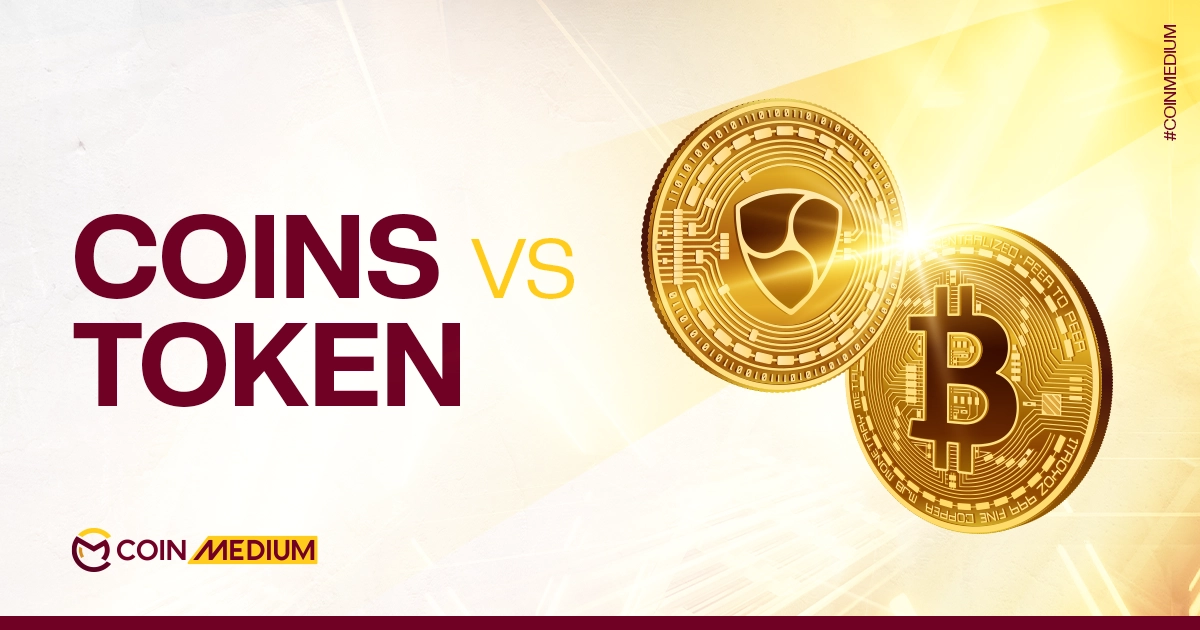


- What key differences distinguish coins from tokens in how they are created and operate within blockchain networks?
- Why are coins considered the foundation or infrastructure layer of a blockchain ecosystem?
- What are the different types of tokens and what roles do they play in decentralized projects?
- Why does understanding the coin vs. token distinction matter for investors?
The coffee shop conversation unfolded like countless others. A trader recounted recent crypto gains, using the words “coin” and “token” in the same breath, treating the terms as interchangeable labels for digital money. He is not the only one to do so. Scroll through any crypto trading forum or Reddit discussions, and the pattern repeats. These words are used casually with no attention paid to their actual meaning.
The stark reality is that they are not the same. And for anyone putting money into cryptocurrency, the distinction should matter. Coins and tokens trade on the same exchanges, both show price volatility, and both can generate or evaporate wealth with startling speed. But beneath the shared characteristics lie fundamental differences in construction, function, and also their purpose. Let’s dive deeper into what sets the two apart.
Coins: The Infrastructure Layer
Crypto coins serve as the native currency of their respective blockchains. Bitcoin operates on the Bitcoin blockchain. Ethereum powers Ethereum’s network. Cardano functions within Cardano’s infrastructure. Each coin maintains an exclusive relationship with its blockchain, and one cannot exist without the other most of the time.
These are not merely digital currencies floating in cyberspace. Coins maintain blockchain functionality. They facilitate transactions, cover fees for smart contract execution, and reward the individuals maintaining network security. Remove the coin, and the entire blockchain infrastructure collapses.
The creation of new coins follows what developers term “consensus mechanisms”: protocols through which networks validate transactions and maintain security. Bitcoin miners consume enormous quantities of electricity to solve computational puzzles, with winners receiving freshly minted Bitcoin. Ethereum transitioned to a staking system where coin holders lock up existing assets and earn rewards for transaction validation.
Launching a new coin from scratch presents formidable challenges. The task extends beyond creating digital currency. It requires constructing an entire blockchain network. Success demands miners or validators willing to secure it, developers committed to building it, and users willing to adopt it. Litecoin, which debuted in 2011 as a faster, lighter Bitcoin alternative, modified block times and mining algorithms. Even with Bitcoin’s codebase as a foundation, establishing Litecoin required substantial technical expertise and years of sustained effort.
The major coins—Bitcoin, Ethereum, Solana, Cardano, and Polkadot—operate independent networks. They function as the landlords of the crypto world, owning the property where everything else gets constructed.
Tokens: Building on Established Ground
Tokens are virtual assets that are developed on existing blockchain networks, like Ethereum. In other words, tokens use existing platforms, as compared to coins that operate on their own blockchains. Stablecoins are a popular category of tokens designed to maintain a fixed value, and they are pegged to fiat currencies like the U.S. dollar. They are issued as smart contracts on networks such as Ethereum or Solana, which makes them function as tokens rather than independent coins. This gives them the flexibility of crypto with the stability of traditional money, making them essential for payments, trading, and DeFi applications.
Token creation is relatively simple with standard templates like Ethereum’s ERC-20. This simplicity has driven innovation but also introduced fraudulent projects. Genuine tokens bring credibility to blockchain projects, make decentralized trading possible, and open the door to entirely new types of digital economies that operate beyond the reach of traditional banks and financial systems.
Tokens have enormous potential in practical applications across the whole cryptocurrency ecosystem. Stablecoins such as Tether are created to maintain their price pegged to fiat currencies, offering traders a safe haven of value during periods of market volatility. Governance tokens such as Uniswap’s UNI give their holders voting rights for the functioning of decentralized exchanges. Chainlink’s facilitates payment for oracle services that provide smart contracts with valuable real-world data.
Tokens can do a lot more than just act like digital money. In blockchain games, some tokens give you access to special items or features. Others work more like voting rights, letting people have a say in how a decentralized project or community is run. Then there are NFTs, which prove you own something totally unique online, like a piece of digital art or a collectible. As the technology keeps growing, crypto players keep finding new and creative ways to use tokens.
Since Ethereum introduced its ERC-20 standard in 2015, developers have flooded markets with thousands of tokens. They generate entire token supplies instantly, then distribute them through sales, airdrops, or rewards programs. This simplicity leads to both legitimate innovation and widespread deception. The Initial Coin Offering frenzy demonstrated this double-edged sword perfectly. Early investors minted fortunes while retail traders lost millions to projects featuring nothing but stolen whitepapers, stock photos, and empty promises. Founders vanished overnight with substantial funds, leaving worthless tokens behind.
Why the Distinction Matters
It is crucial to understand the difference between coins and tokens because the risks of both are not the same. Coins like Bitcoin and Ethereum are the foundation stones of large blockchain networks and tend to be more stable due to their widespread use and support. Tokens, however, are tied to specific projects built on these networks. They can offer big rewards if the project succeeds, but they also come with higher risks—if the project fails or the team disappears, tokens can quickly lose value. In short, coins are generally safer, and tokens are more of a gamble.
Therefore, smart investors should always ask one question before investing: coin or token? Doing this separates informed decision-makers from momentum chasers in the complex digital asset landscape.