
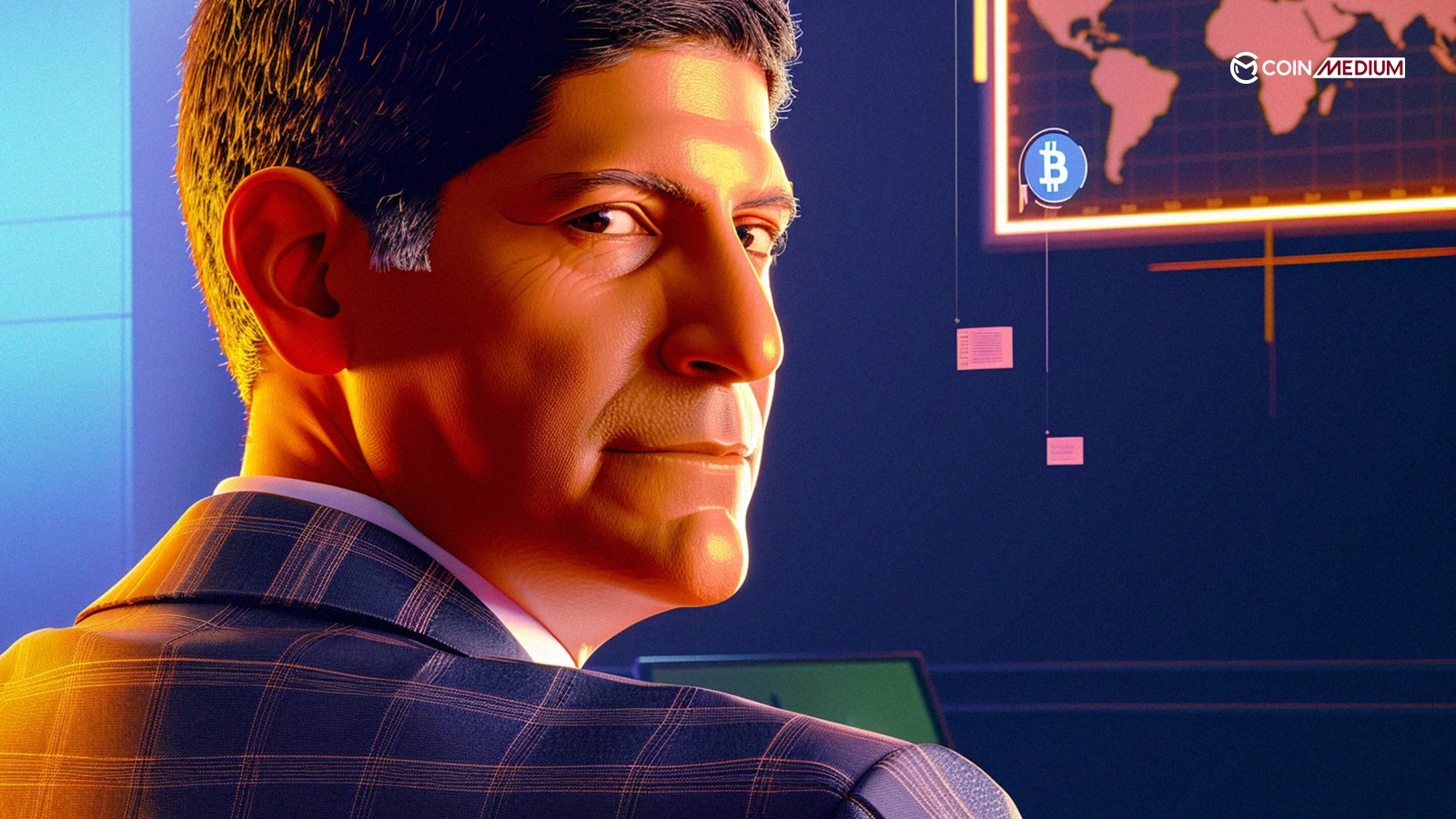


Kevin Warsh, President Donald Trump’s nominee to chair the Federal Reserve, filed a 69-page financial disclosure on April 14, 2026, that revealed indirect investments in more than 20 crypto and blockchain-related entities, making him potentially the most crypto-exposed Fed chair nominee the United States has ever seen.
A Portfolio That Covers the Whole Crypto Map
The Office of Government Ethics (OGE) filing details a joint portfolio with his wife, Jane Lauder, granddaughter of cosmetics mogul Estée Lauder, worth at least $192 million. The bulk of that sits in two Juggernaut Fund LP positions, each valued at over $50 million, tied to Warsh’s advisory work with billionaire investor Stanley Druckenmiller’s Duquesne Family Office. Druckenmiller is himself one of the more vocal macro investors in the Bitcoin space.
The crypto holdings are buried inside two venture fund structures: DCM Investments 10 LLC and a series of funds labeled AVF I, AVF II, AVF III, and AVGF I and II. Under OGE reporting rules, individual line items in these funds carry no stated value, which means each position is worth less than $1,000.
The disclosed names span nearly every corner of the crypto ecosystem. On infrastructure, Warsh holds exposure to Solana, Optimism, Blast, and Flashnet, a Bitcoin Lightning Network payments startup. In DeFi, the portfolio includes dYdX, a decentralized derivatives exchange, and Compound, one of the oldest lending protocols in the space.
Eleanor Terrett of The Block described the filing on X as “likely one of the more crypto-heavy disclosures we’ve seen from a would-be Fed Chair,” noting the positions appear small, illiquid, and generated no reportable income, pointing to indirect venture-style exposure rather than direct liquid holdings.
He Is Pledging to Sell, But Exiting Is Not Simple
Warsh has committed to divesting all flagged holdings within 90 days of confirmation to satisfy Ethics in Government Act requirements. OGE certifying official Heather Jones reviewed the filing and confirmed he would be in compliance once the divestitures are complete.
But the practical challenge is real: selling a token position in Compound or dYdX is relatively straightforward.
Even after selling, Warsh will face a recusal landscape that cuts directly through the Fed’s policy calendar. Federal ethics rules impose a one-year cooling-off period for matters touching recent financial interests.
Warsh Has Always Been Closer to Crypto Than He Let On
This disclosure is not the first time Warsh has connected with the digital asset world. He was an early investor in Basis, an algorithmic stablecoin project, and held advisory and investor roles with Bitwise Asset Management, the firm behind one of the US spot Bitcoin ETFs. His ties to Marc Andreessen drew him into the early crypto VC ecosystem years ago.
His public comments on Bitcoin have sharpened over time. In a conversation with Druckenmiller, he pushed back against what he called condescension toward people buying Bitcoin, calling it an asset that “could provide market discipline” and signal when monetary policy needs fixing.
He has described Bitcoin as a potential sustainable store of value, comparable to gold, while maintaining it is not a dollar substitute. VanEck digital assets head Matthew Sigel shared those quotes on X, flagging them as significant given Warsh’s position. MicroStrategy’s Michael Saylor has gone further, predicting Warsh could become the first pro-Bitcoin Fed Chair.
One Senator Is Still Holding the Nomination Hostage
Warsh’s April 21 confirmation hearing is confirmed, but the vote beyond it is not. Senator Thom Tillis (R-NC) has said he will block Warsh’s final Senate confirmation until the Department of Justice drops its criminal probe into outgoing Fed Chair Jerome Powell, a probe that US District Judge James Boasberg has already called politically motivated and sought to dismantle by quashing DOJ subpoenas in March.
Tillis told reporters on April 14 he remains a “hard no.” Senate Banking Committee Chair Tim Scott (R-SC) told Fox Business he is confident the DOJ will wrap up the investigation in coming weeks and that Tillis “will be a yes on Kevin Warsh.”
The clock is ticking, Powell’s term expires May 15, 2026, and the White House says it is “highly confident” Warsh will be seated before that date. Whether the Senate math holds is another question entirely. If confirmed, Warsh becomes the first Federal Reserve Chair in history to have entered office with direct venture exposure to the crypto industry.


