
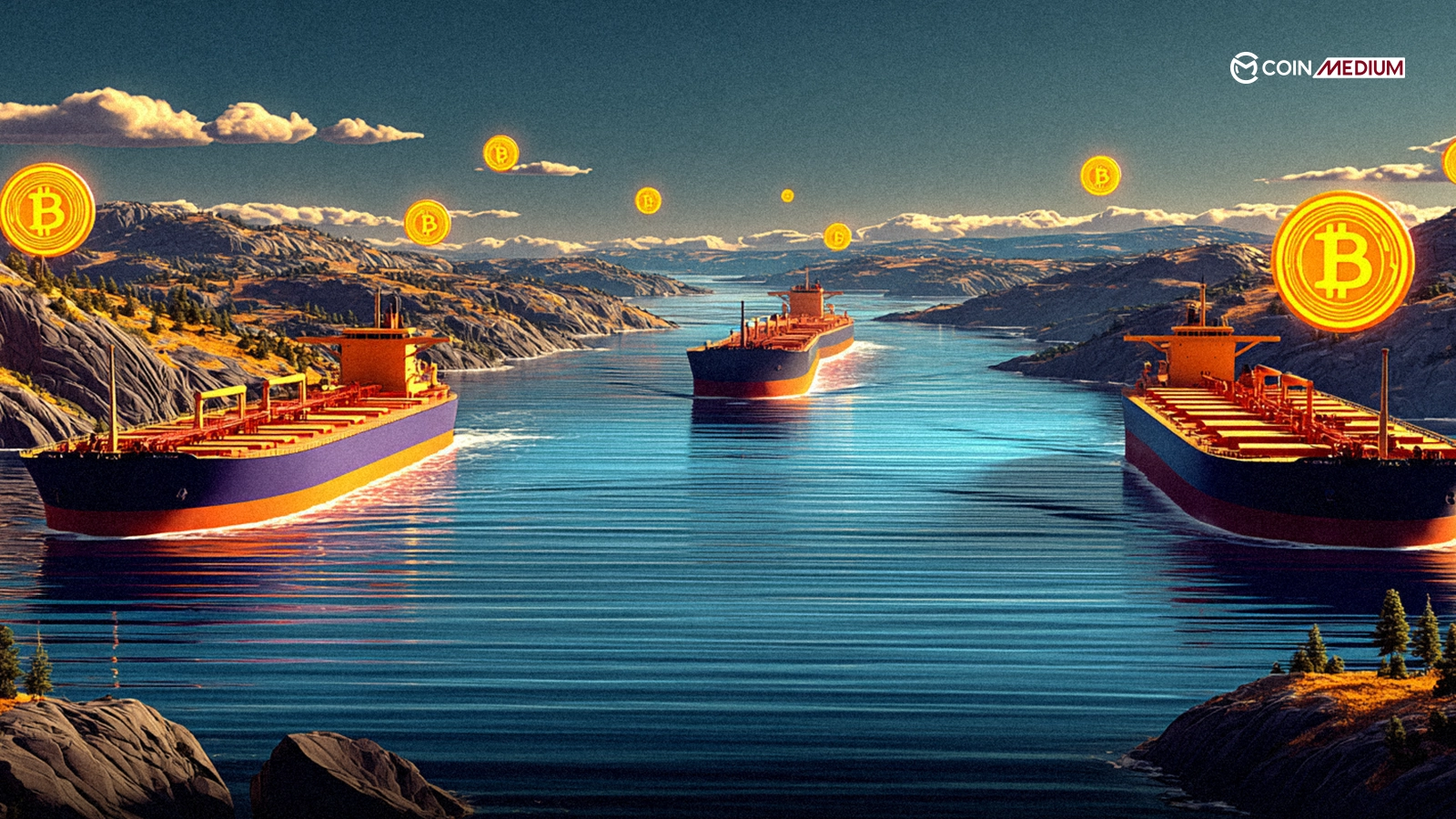



Authorities in Iran have considered the option of introducing crypto tolls on passing ships to regulate traffic in the strategically crucial Strait of Hormuz. The news comes barely a day after the US president announced that the two countries had reached a two-week ceasefire deal, in which, among other terms, the reopening of the strait was agreed upon.
According to a detailed report from the Financial Times published on Wednesday, a spokesperson for Iran’s Oil, Gas and Petrochemical Products Exporters’ Union confirmed that certain vessels passing through the waterway would face a straightforward tariff. Empty oil tankers would sail through free of charge, but loaded ships could expect to pay the equivalent of $1 per barrel of oil, settled directly in Bitcoin, currently hovering around $71,098.
How will the crypto tolls work?
The spokesperson, Hamid Hosseini, emphasized that Iranian authorities plan to review each vessel during the ceasefire window to confirm it isn’t carrying weapons or prohibited cargo. Once documentation arrives via email and the assessment clears, crews will have just a few seconds to complete payment in Bitcoin.
Hosseini explained that this rapid, digital process helps ensure funds can’t be easily traced or seized under existing sanctions, giving operators a secure and efficient way forward. It’s the kind of practical innovation that shows crypto’s growing real-world utility beyond trading floors.
Many vessels have been effectively sidelined from the strait since US and Israeli airstrikes targeted Iranian sites earlier this year in February and March.
These developments triggered a ripple effect in the international energy markets, with the price of crude oil soaring past $100 per barrel mark after four years.
On the other hand, the volatility in the crypto markets also gained pace, with the Bitcoin price moving up and down around the $65,000 to $75,000 range, depending upon how the market players reacted to the news.
President Trump shared the ceasefire details on his Truth Social platform Tuesday, describing the deal as including a full suspension of bombing and attacks on Iran for two weeks, plus the “complete, immediate, and safe opening” of the Strait of Hormuz.
In response, Iranian state media noted that Tehran had submitted a 10-point plan to the US as a condition for moving forward.
These included retaining Iranian sovereignty over the strait and ending the long-imposed economic sanctions, which had stifled Iran’s economic growth.
Iran’s tryst with crypto
Indeed, the current situation seems very appropriate given Iran’s historical tendency toward the adoption of cryptocurrencies for a long time. before the ongoing conflicts arose. As can be seen, even before the February skirmishes, there were indications that Iran was resorting to cryptocurrencies due to the weak rial against the dollar.
Blockchain analytics firm Elliptic revealed in January that Iran’s central bank had acquired around $500 million worth of Tether’s USDT stablecoin. Separately, TRM Labs tracked approximately $3.7 billion in total crypto flows into and out of Iran. This shows how crypto had already become a quiet but powerful tool for bypassing traditional financial restrictions.
However, now that there is an opportunity for a cease-fire, the introduction of crypto tolls may mean that digital money will officially come to the international trade market as a payment method in this particular case. The ships of friendly nations or those that satisfy the requirements for assessment will have escort and will be able to use the strait safely, thus transforming a potential source of danger into a source of income.
If this project succeeds, it may inspire other countries in the same position to develop their own blockchain-based payment system for their strategic goods. To all cryptocurrency fans, including investors, this serves as a good example that blockchain is not only used for decentralized finance and NFTs but also for practical purposes.
The reality, therefore, is that the use of cryptocurrencies by Iran shows the evolving dynamics between conventional forms of power and new technological innovations. While it may prove to be a temporary measure that exists during the ceasefire period, what is evident is that the Strait of Hormuz is not merely a geographical location.
Rather, it is now an experimental area for the impact of cryptocurrency in international business transactions. As developments unfold, staying informed through trusted sources like coinmedium.com will be more important than ever for anyone navigating crypto tolls on these fast-moving waters.


