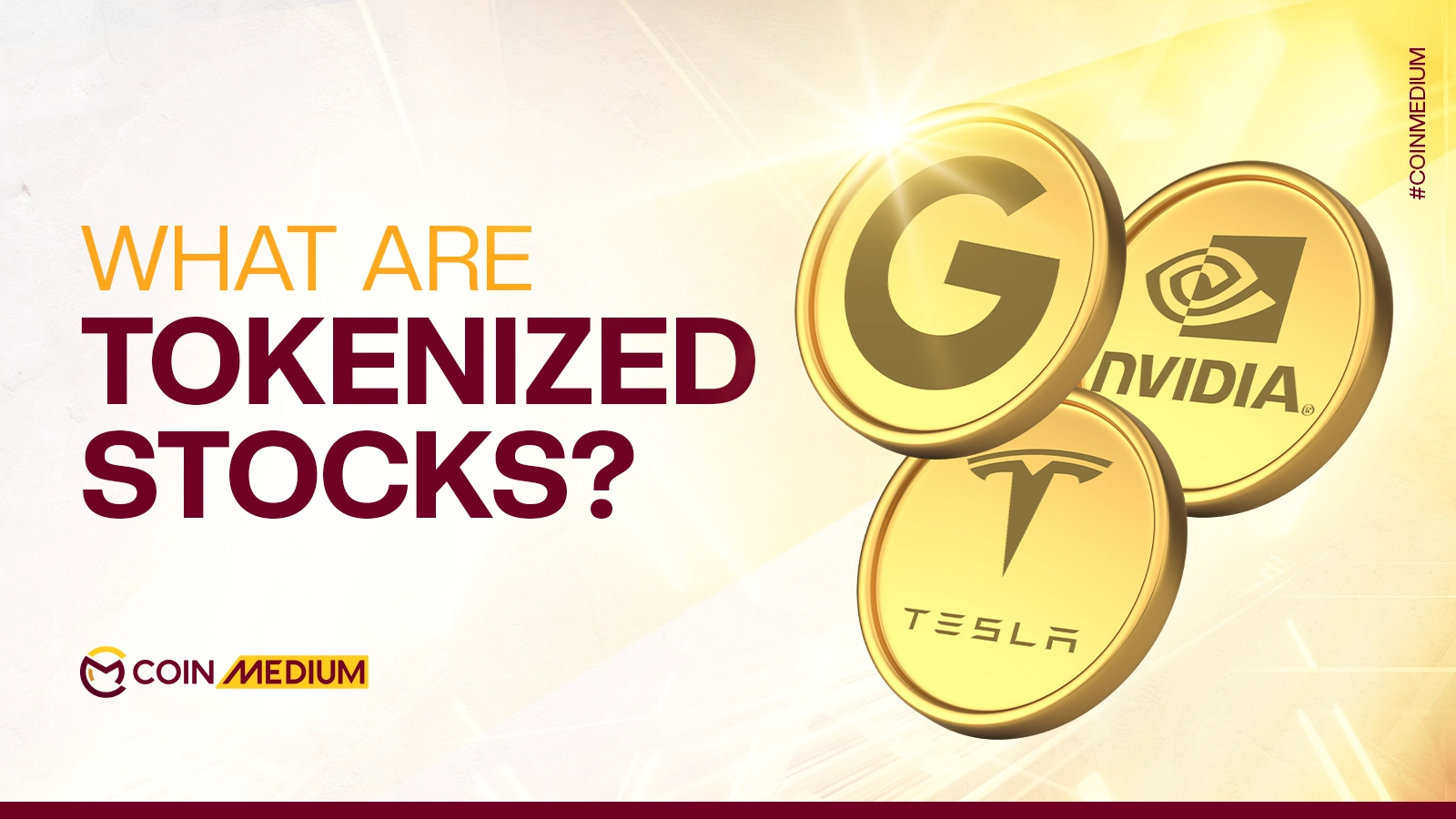


Who wouldn’t want to have stocks like Apple or Tesla in their portfolio? These stocks are much coveted, but also hard to get. Not because they are pricey, but you’d have to play by the rules, open a brokerage account, wait for the market to open at 9:30 AM, and then go ahead and at least buy one full share. But what if you could buy just a tiny slice of it for just $10. Better still, what if you could buy it using crypto in your digital wallet, trade it any time of day or night, and even lend it out to earn extra money? Now, that sounds promising and is also the promise that tokenized stocks hope to deliver.
Tokenized stocks are a bridge between the trillion-dollar traditional stock market and the fast-moving world of blockchain. It’s like a “digital twin” of a regular stock that lives on the blockchain. But how do they actually work, where did they come from, and are they worth your time? Let’s break it down step by step.
What Exactly Are Tokenized Stocks?
At its simplest, tokenized stocks are a digital version of a stock and represent a share of a real company. This digital version, let’s call it the token, is programmed to follow the price of the real stock. So if the stock goes up 5% in trade, your token value will also go up by 5%. You hold it in a crypto wallet, just like you’d hold Bitcoin, and you can buy, sell, or transfer it instantly using crypto or stablecoins like USDC.
There are generally two ways these are set up:
Fully Backed: A regulated company buys the actual shares and locks them in a vault (custody). They then issue one digital token for every one share they hold. This is really important when it comes to safety.
Synthetic or Derivatives: These tokens don’t always own the real stock. They rely on intricate mathematics and smart contracts to replicate the price. These are riskier because you’re betting on the price, not necessarily owning a piece of the company.
Where Did Tokenized Stocks Come From?
The idea grew out of the Initial Coin Offering (ICO) craze of 2017. Back in the day, a slew of crypto projects were peddling tokens that resembled unregulated stocks, a practice that quickly attracted the ire of regulators such as the SEC. However, by 2019 and 2020, the industry realized that instead of fighting the law, they could leverage blockchain technology to make conventional stock trading more efficient.
Then companies like Mirror Protocol and Synthetix began experimenting with “synthetic” versions of stocks. However, the real turning point came when regulated exchanges like FTX (before its collapse) and Bittrex started offering “wrapped” stocks that were backed by actual shares held in German or Swiss banks. In recent times, major financial names like Blackrock or even Robinhood have been pushing for real-world asset tokenization, giving it more legitimacy than being just a crypto fad.
Regular stocks vs Tokenized stocks: The Difference
Think of a regular stock like a cheque-book transfer and a tokenized stock like a UPI or Venmo. Both move money, but one is much faster and more flexible.
| Feature | Regular Stocks | Tokenized Stocks |
| Trading Hours | 9:30 AM – 4:00 PM (Weekdays) | 24/7, 365 days a year |
| Settlement | T+2 (Takes 2 days to clear) | Instant (Seconds to minutes) |
| Minimum Buy | Usually 1 share (unless the broker allows fractions) | Any amount (buy $1 of a $3,000 stock) |
The Pros Of Using Tokenized Stocks
The biggest plus point is fractional ownership. Say you want to buy Amazon shares but don’t have $3,000? With tokenized stocks, you can buy $5 worth. It democratizes investing for everyone. Since it’s on the blockchain, the market never sleeps. If a company releases big news on a Saturday, traditional investors have to wait until Monday morning to react. Tokenized stock holders can trade instantly at 2 AM on a Sunday. It’s also a lot more accessible, as investors from any part of the world can easily access a blockchain wallet. More importantly, by removing the “middlemen” like the clearinghouses and banks, the cost of trading can drop significantly over time.
But What’s The Catch?
In many countries, tokenized stocks still don’t have regulations to govern it. Your money could be at risk if the government shuts down the platform you use. Theoretically, a bug in the code or a “hack” could lead to a loss of funds, as these tokens operate on computer code. There is also counterparty risk, which means you are trusting that the company issuing the token actually has the real shares in its vault. If they are lying, the token is worthless. But, the most important part to note is that you have no voting rights in the company as a shareholder, as most tokenized stocks do not give you this power.
So, as an investor you have to keep a few things in mind before jumping on the tokenized stocks bandwagon. First, check if it is 1:1 backed by real shares or is it a synthetic price tracker? You should verify if the exchange has a good reputation and valid licenses? Are you fine with not having voting rights or attending shareholder meetings?
Where Are Tokenized Stocks Heading?
A recent study by Boston Consulting Group (BCG) predicted that the tokenization of global illiquid assets could reach $16 trillion by 2030. Current studies from the World Economic Forum highlight that “on-chain” settlement could reduce costs for the financial industry by up to 80%. Some forecasts predict that the value of tokenized stocks will increase from under $1 billion currently to $10 billion or more by the end of 2026.
At least in the near future, tokenized stocks aren’t replacing traditional investing. At the very least, it does give you a chance to dive into stocks, leveraging the same speed and adaptability that crypto enthusiasts enjoy. For those new to crypto, especially those already invested in Bitcoin or Ethereum, this is a logical progression. It allows you to gain stock-like exposure without stepping away from the blockchain. So would you dare to give it a try? For all you know, your future investment strategy could very well blend traditional shares with their tokenized counterparts.