

A massive library. Millions of books. Someone sneaks in at night and changes one sentence on a page. Tracking down that single altered line by reading every book cover to cover would take years. The only practical solution is a system that can quickly identify the correct shelf, book, and page.
In the world of blockchain, that system has a name: the Merkle tree. If anything happens to this system, then Bitcoin, Ethereum, and most major blockchains operating today may collapse.
What Is A Merkle Tree?
There is nothing botanical about it. A Merkle tree is a concept for organizing data so it can be verified fast and completely. Computer scientist Ralph Merkle developed the concept in 1979, decades before the term “blockchain” existed.
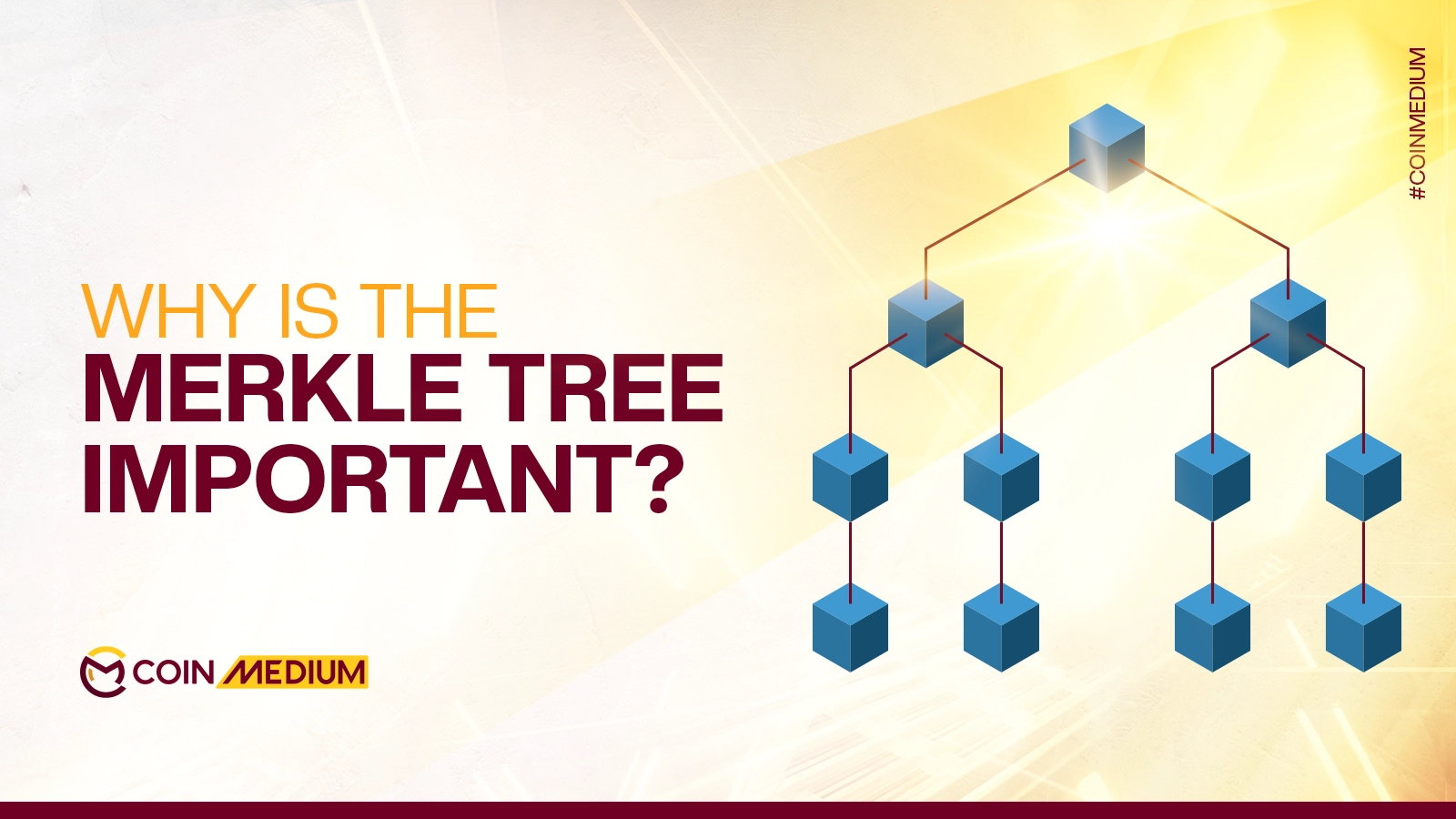
As per Ralph Merkle’s concept, a Merkle tree (also called a hash tree) is a data structure where each leaf node holds the cryptographic hash of a data block. Each non-leaf node above it holds the hash of its children—typically by concatenating (joining) those child hashes and then hashing the result. This builds upward until a single top node remains: the Merkle root, a compact cryptographic commitment to everything below it.
Merkle introduced the concept in the paper called “A Certified Digital Signature.” He aimed to create efficient digital signatures. The key insight of the paper was that large datasets could be verified with proofs of logarithmic (small) size rather than requiring the entire dataset to be checked.
How Cryptocurrencies Use The Tree
Blockchains like Bitcoin use the Merkle tree to organize and secure every transaction inside a block. Here is how it works: every transaction gets turned into a hash—a unique digital fingerprint. Change even one character in the transaction, and the hash becomes something entirely different. These hashes are located at the bottom of the tree, serving as the leaves.
From there, the tree is built upward. Hashes are paired and hashed together—transaction 1 and transaction 2 produce one combined hash, and transactions 3 and 4 produce another. If an odd number remains at any level, the last hash is duplicated to keep the pairing even. This continues level by level until one hash remains at the very top: the Merkle root. It represents every single transaction in the block (for instance, the Bitcoin block).
The Merkle root goes into the block header, which is the part miners actually work on. Alongside it sit the hash of the previous block, a timestamp, the current difficulty target, and the nonce (which is a number miners can freely adjust). Miners hash the entire header repeatedly—often billions of times, changing only the nonce, as they are searching for a result that starts with a required number of zeros. The harder the network, the more zeros required. When a miner finds a hash that meets the target, the full block goes out to the network. Everyone checks it, and if it passes, the block joins the chain.
In this whole blockchain process, the Merkle tree is a fundamental component of operation, working alongside cryptographic techniques and Byzantine fault tolerance mechanisms. It is like a family tree running in reverse for the blockchain—individual transactions at the bottom get bundled and fingerprinted upward, level by level, until one single code at the top represents every transaction in the block. Tamper with any transaction, and that code changes instantly, exposing the fraud. It’s essentially a tamper-proof receipt for the entire block.
Every crypto transaction gets bundled with thousands of others into a block and written permanently into the blockchain—a public record that no government, bank, or hacker is supposed to alter. The Merkle tree is what makes this guarantee hold.
Without it, confirming whether a single transaction was included in a block means checking every transaction in that block, one by one, until the right one turns up. The Merkle tree cuts straight through this problem. It creates a short, direct path from any individual transaction up to the Merkle root, requiring only a small number of hashes to be checked along the way—a handful, regardless of how many transactions the block holds. This is called a Merkle proof. What once took minutes now takes milliseconds.
The Tree That Catches Cheaters
This concept is easier to understand through an example. Say someone tries to quietly alter an old transaction—changing a 1 Bitcoin payment to 10. The moment this transaction is touched, its hash changes. Every level of the tree experiences this change, culminating in a completely different value at the Merkle root. Every node on the network already holds the original Merkle root. When the altered version arrives, the mismatch is spotted immediately, and the block is rejected. No regulator and no audit are needed. The math alone exposes the fraud, and there is no way to hide it.
The Merkle tree’s reach goes well past digital currency. Logistics companies use it to confirm shipments have moved from origin to destination without interference. Hospitals look to it to keep medical records sealed against tampering. Blockchain-based voting platforms rely on it to lock each ballot exactly as cast. Wherever fast, low-cost data verification is needed without the need for a central authority, the Merkle tree concept is doing the work.
Small Structure, Massive Stakes
Ralph Merkle was working on a narrow cryptography problem when he built this. Trillion-dollar networks and digital asset markets were nowhere in the picture. Yet that is precisely where his invention ended up. Every Bitcoin transfer, every smart contract, and every NFT minted on a blockchain clears through a Merkle tree before it becomes a permanent record.
No press releases mark its milestones. It does not trend anywhere. Most people who use blockchain daily have no idea it exists. But remove it, and what remains is a system too slow to be practical, too weak to be trusted, and too exposed to be worth running. Indeed, the Merkle tree is the part of the machine nobody sees. But in engineering terms, it is usually the clearest sign that something is working exactly as it should.