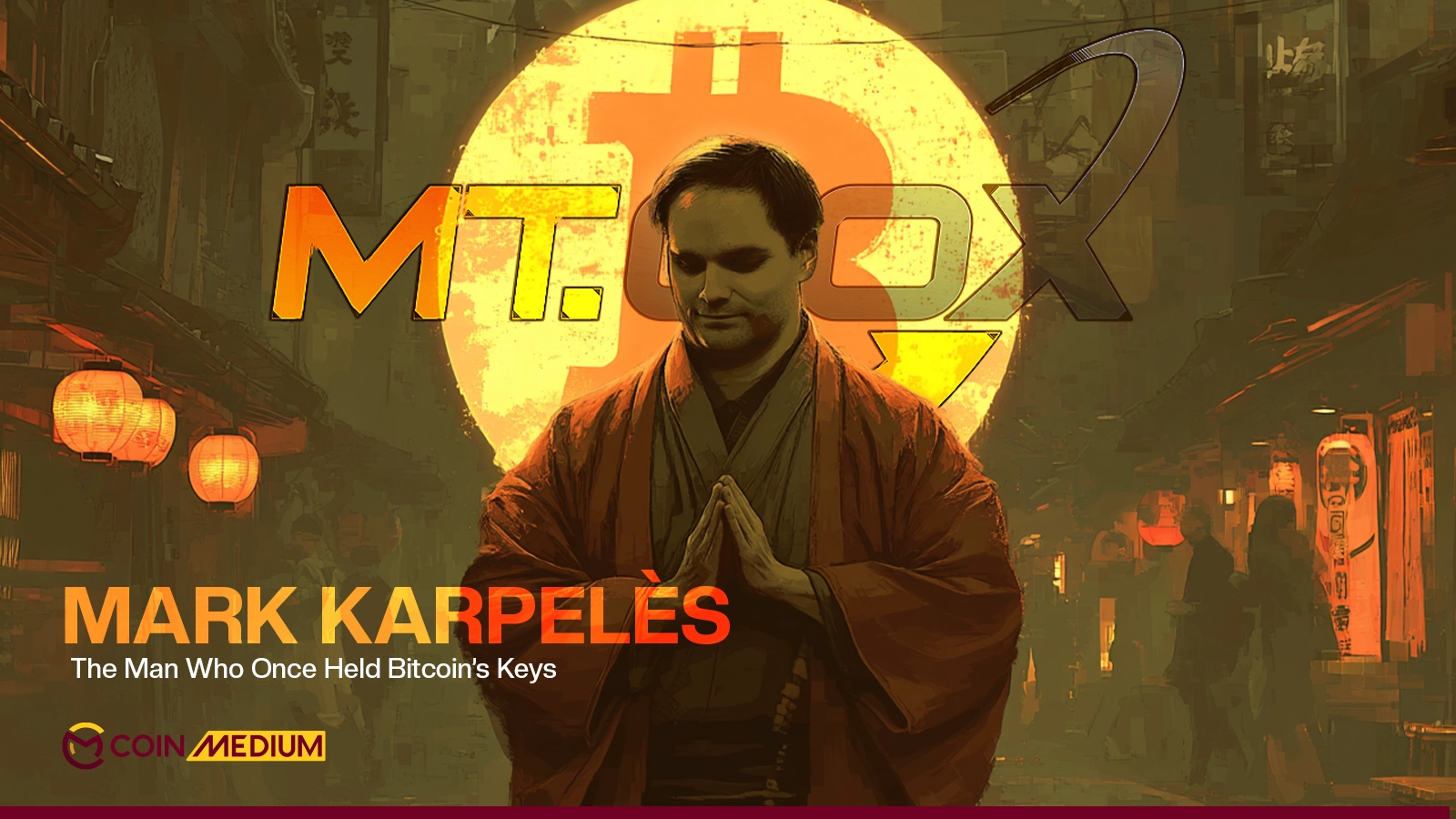


Mark Karpelès is without a doubt one of the most controversial figures in the early stages of Bitcoin’s history. Initially, he was the one responsible for managing the digital assets worth up to billions of dollars, but later he became the main character of a tragedy that not only affected the crypto world but also the whole financial industry. His narrative still compels people to ponder over issues such as trust, security, and digital finance.
The focus of the tumult was Mt. Gox, a cryptocurrency exchange located in Tokyo that was responsible for the majority of the world’s Bitcoin transactions when it was at its height. When it unexpectedly went down in 2014, hundreds of thousands of users were left baffled, uncertain if their money had been lost for good.
More than ten years later, Karpelès continues to be a representative of the crypto market’s tumultuous past, where innovation had outpaced even the most basic security measures, ultimately costing the customers a fortune.
How Did Mark Karpelès Enter the Bitcoin World?
Mark Karpelès arrived in France and exhibited an early fascination with computers and programming. His academic background was not of the usual kind through finance or economics. He turned his attention to computer science and gradually developed his skills in the areas of software development, system administration, and web infrastructure through actual participation.
Karpelès rapidly gained popularity in the crypto world together with his working on numerous technology projects and startups in Europe and Asia plus more. He was an ace and thus, his professional background remained strictly technical with little exposure to risk management, compliance or large-scale financial operations.
In 2009, at the young age of 24 years, Mark Karpelès relocated to Japan, where he started up the company called Tibanne Co. Ltd. The company’s activity was concentrated on offering network infrastructure and web-hosting services which was in accordance with Karpelès’ experience in software and systems engineering.
A year later, in 2010, Mark Karpelès acquired the Mt. Gox domain. The name originally stood for “Magic: The Gathering Online Exchange”, a website created by programmer Jed McCaleb to trade cards from the popular trading card game Magic: The Gathering. The platform was later repurposed into a Bitcoin exchange and sold to Karpelès when McCaleb exited the project.
After the acquisition, Karpelès became the controlling shareholder, holding more than 80% of the company. He took direct control of the exchange’s infrastructure, codebase, and operations, at a time when Mt. Gox was handling a growing share of global Bitcoin trading.
In 2011, it switched its main activities to Japan. The exchange was still not very big at that time, but his technical know-how allowed him to take full control over the infrastructure, the platform and its future were thus placed squarely in his hands.
The Rise and Collapse of Mt. Gox
Mark Karpelès took over the exchange’s technical systems and daily operations completely after purchasing Mt. Gox in 2011. The acquisition allowed him to have the platform’s entire codebase, servers, and scenarios at his disposal during a period when internal monitoring was nearly nonexistent and industry norms were still to be established. The exchange’s entire architecture was under the control of a very small team, with the most important decisions made by Karpelès.
In the year 2012, the establishment of the Bitcoin Foundation was one more milestone in the career of Mark Karpelès. The non-profit was co-founded together with early Bitcoin personalities like Gavin Andresen, Charlie Shrem, Peter Vessenes, Roger Ver, Patrick Murck, and Mehul Puri.
The foundation was established to assist Bitcoin’s development by commoning standards, funding core labor, and carrying the project in public and regulatory discourse. It was, then, considered to be a major step in the direction of providing Bitcoin with more infrastructure and legitimacy as it steadily continued to expand.
The rapid increase in Bitcoin usage resulted in Mt. Gox failing to cope with its expansion. Company testimonies and subsequent legal verdicts revealed that the organization was lacking in proper accountancy, internal control, and wallet separation. Security weaknesses were either ignored or not fixed, and software bugs combined with poor accounting practices made it very hard to determine the exact amount of money available.
The beginning of 2014 saw users starting to complain about withdrawal delays, which led to making the liquidity of the exchange a topic of discussion. Mt. Gox suddenly stopped all withdrawals in February that year and shortly after applied for bankruptcy protection in Japan. The firm revealed that around 850,000 Bitcoins (~473 million dollars at the time) had disappeared, later attributing the disaster to lax security that exploited network vulnerabilities.
Initially, Mt. Gox was responsible for around 60% to 70% of the total Bitcoin trading volume in the world. As soon as it went bankrupt, Bitcoin lost a big part of its users’ and the market’s trust, thus the whole world, not just one company, got to the point of not trusting the cryptocurrency. The users and observers considered Mt. Gox as Bitcoin. Once it went down, there were genuine concerns that the whole network’s trust might vanish, which could lead to consigning the adoption, liquidity, and developer activity to the very early stage.
Bitcoin, however, was able to come through, largely because its basic protocol continued running uninterrupted, thereby demonstrating that it was not at all reliant on any particular exchange. Alongside, the crash of Mt. Gox turned out to be one of the industry’s turning points. It made the trading platforms, investors, and regulators deal with the issues like custodianship, transparency, internal controls, and operational risk—the operations of crypto platforms today are still influenced by the lessons learned.
Bitcoin was trading above $1,100 in late 2013, but after Mt. Gox halted withdrawals and filed for bankruptcy in early 2014, the price fell to around $400, reflecting the sharp loss of market confidence.
From CEO to Defendant: The Charges Facing Mark Karpelès
Following the downfall of Mt. Gox, Mark Karpelès became the target of a series of criminal and civil investigations in Japan and other places. Although a few of the charges against him were dropped later, the situation revealed major problems in the way of controlling and securing one of the early trading platforms that played an important role in the history of cryptocurrencies.
The main charges and legal actions are:
Mt. Gox announced the loss of around 850,000 Bitcoin (that mainly belonged to the users), which resulted in the halt of withdrawals in February 2014. The exchange filed for bankruptcy in Japan and the United States.
Shortly before the bankruptcy filing, Karpelès resigned from the Bitcoin Foundation’s board. Afterwards:
- He was detained by the Japanese police in 2015 on account of embezzlement and tampering with electronic records.
- His company was prosecuted for changing the internal accounting data of Mt. Gox, but they could not demonstrate that he had absconded with customers’ money.
- In 2019, a Japanese court acquitted him of embezzlement but sentenced him to a suspended sentence for falsifying electronic records.
- The investigations connected some of the stolen Mt. Gox funds to external parties, one of them being Alexander Vinnik, who was arrested in 2017 for money laundering related to the hack.
- Karpelès also received public accusations from Ross Ulbricht, who alleged that Karpelès was behind the “Dread Pirate Roberts” persona—an assertion Karpelès disputed and that was never backed by any proof.
- Although there are still claims from creditors in the civil court, no upper court has declared Karpelès as the person who executed the Mt. Gox hack so far.
Is It Over Yet?
The downfall of Mt. Gox was a calamity for several different parties, all with the same common goal of making money through cryptocurrency trading. Mark Karpelès, the company’s CEO at the time, has been trying hard to get back in the good books of the tech world and that of cryptocurrencies as well, but in no way that can be called adventurous compared to his trial days. He has been quite visible on the Internet, with the occasional raising of issues related to the security of exchanges, Bitcoin’s infrastructure, and the teachings he claims were drawn from the Mt. Gox saga. In recent times, Karpelès has also hinted at plans to develop new technology projects by sometimes underlining the importance of honesty and stronger protection where Mt. Gox was branded to have failed.
On the other hand, the plot of Mt. Gox remains unfinished. A multitude of users have been waiting for a considerable period of time to get back at least a portion of their digital asset through a tedious and never-ending rehabilitation process in Japan. The payment of creditors, which was foreseen to take place years ago, has been postponed several times due to the complications of bureaucracy and the law. The repayment deadline is now set for 2026, which means the case still has life and relevance not only for the creditors but also for the entire cryptocurrency market.
Every time there is a delay, it refreshes the memories of the fall of Mt. Gox and brings about the question of market impact during the distribution time. To many, Mt. Gox is an untold story of a financial disaster rather than just a historical failure.